

レポート

This article is Chapter 11 of Bain’s global Technology Report 2020. Explore the contents of the report here or download the PDF to read the full report.
In a matter of weeks, automation has gone from a low priority to mission-critical for many executives. With all the attention on automation that has resulted from the business shock caused by the Covid-19 pandemic, one crucial realization has struck many leadership teams: It’s about resilience.
Companies that invested more in automation before the pandemic have weathered the crisis better than others. They’ve generated higher revenues and experienced fewer disruptions to the supply chain, workforce productivity and demand, according to a recent automation survey conducted by Bain & Company.
Suddenly, automation has climbed much higher on the agenda for many companies.
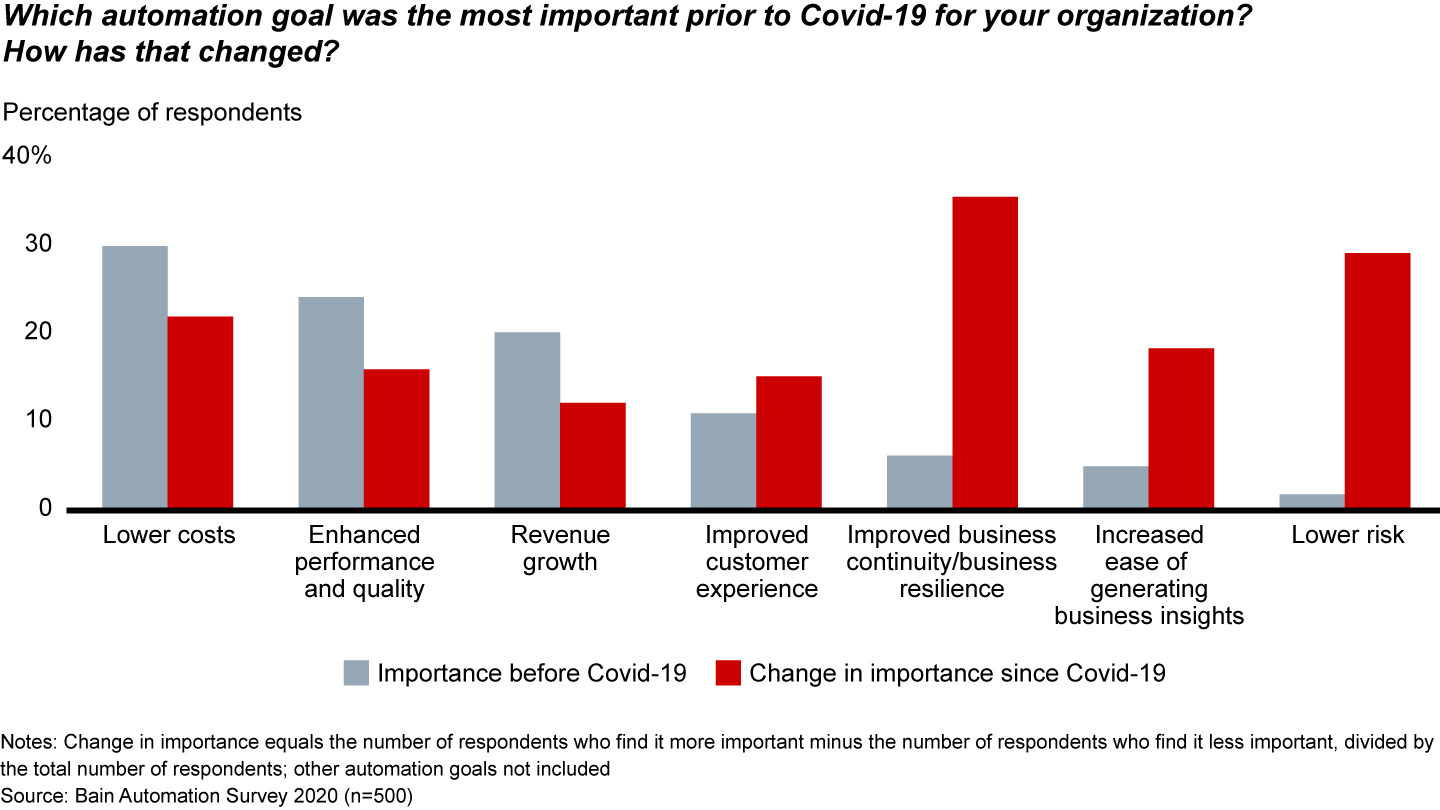
It’s no longer primarily about lowering costs. Companies are increasingly deploying automation to strengthen business resilience, reduce risk and generate useful business insights more easily (see Figure 1).
Figure 1

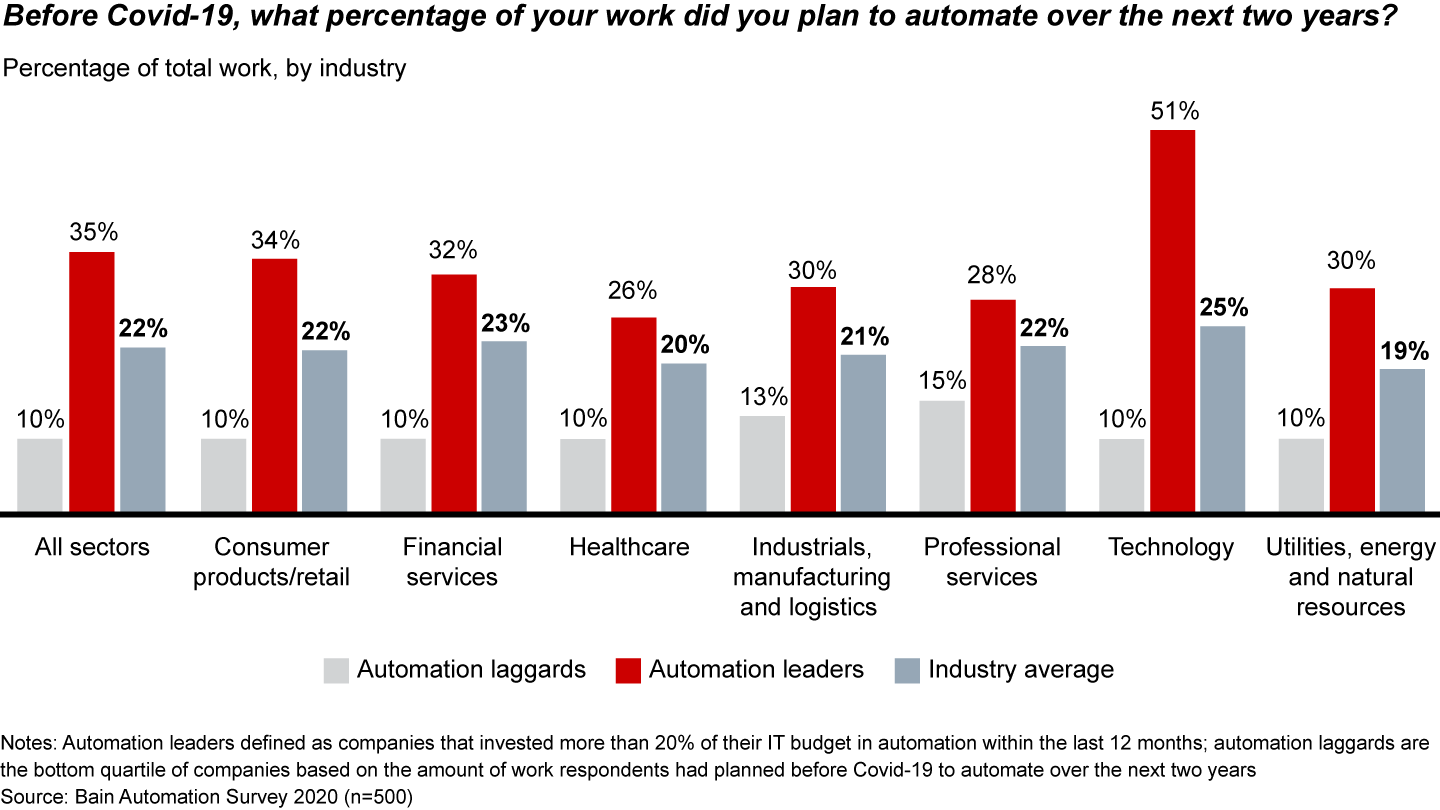
Even though most companies in the survey are accelerating their automation initiatives and traditional barriers are shrinking, today’s automation leaders have a significant head start and aren’t slowing down. Before Covid-19 hit, many leaders planned to automate 30% or more of their manual processes—two to five times more than companies with low automation-adoption rates (see Figure 2).
Figure 2

Over the next year, 38% of the leaders intend to invest significantly more in automation, compared with just 22% of other companies.
What does that mean? Automation leaders are pressing what they see as a competitive advantage, and when the next business shock hits, it will likely put even more stress on companies that haven’t followed through with a bold automation agenda.
It’s no surprise that technology business leaders are among the most optimistic about the potential benefits of automation. Many processes within technology organizations lend themselves to automation, from software testing to managing cloud infrastructure. Plus, technology companies often have more employees with automation expertise who are open to exploring its capabilities. As a result, technology companies have been deploying automation longer than other industries and across more tasks, according to the survey. Technology leaders have seen automation help them adapt to their sector’s rapid pace of change, and they’re ready to expand their efforts.
Before Covid-19, technology companies on average planned to automate more work than any other industry surveyed, and the sector’s most aggressive companies intended to automate a whopping 51% of manual processes. Coming out of the pandemic, around 60% of technology companies plan to automate more offshore activities, the highest rate of any sector surveyed. On average, technology companies plan to have 38% of their employees continue working remotely, even after on-site work resumes, tied with financial services for the highest rate among industries surveyed. Companies are comfortable making that shift in part because they recognize automation can help people work more effectively from home, particularly in minimizing errors and hassle in tasks involving a series of hand-offs among dispersed people, such as the finance team closing the books on the quarter.
Technology companies are also more willing to embrace advanced automation technologies such as machine learning and conversational artificial intelligence (AI), according to the survey.
Add it all up, and the technology sector is well-positioned to shape the emerging landscape of automation.
Spreading automation to all corners of the business
Automation can make a difference across the whole organization. While back-office support and customer service have traditionally had the highest potential, automation can also deliver benefits in R&D, supply chain, operations, and sales and marketing.
In software, automation is helping accelerate product development; deliver professional services at a lower cost; resolve customer issues faster, cheaper and more effectively; and increase selling time for field salespeople and channel partners (see Figure 3).
Figure 3
Some of the most compelling trend lines in recent months reflect how automation has improved the competitive position of technology companies in the midst of the pandemic.
Covid-19 pushed one large technology company, a leader in deploying automation for years, to apply it in new or less mature areas, such as sales and the order-to-cash process. If all goes as planned, the new automation initiatives could help the company—which generates billions of dollars in annual revenue—save hundreds of millions over the next two years.
The changes include making online selection and ordering easier; automating billing; switching to targeted customer communications that require less oversight; and offering clients more self-service tools for resolving issues. The company has also identified ways to streamline and automate back-office sales support tasks and allow salespeople to spend more time on high-value, revenue-generating activities.
These automation moves have a lot of upside beyond saving money. They’re expected to increase revenue, worker productivity and customer loyalty.
Technology companies are also using automation to help solve specific, intractable problems such as moderating content on social media platforms and in other digital forums. When the pandemic hit, some companies weren’t prepared to transition their contractors to working from home, so their moderation operations have been running at reduced capacity. At the same time, traffic has spiked on many of these platforms.
In response, some digital forums are partially automating content moderation with artificial intelligence technologies from developers such as San Francisco-based Hive. Hive has added dozens of clients since March, when many stay-at-home orders went into effect around the world. The company is now processing more than 1 billion posts a month that previously were reviewed by humans or not at all.
In addition to increased efficiency, the product has made content-moderation operations more effective. One client who used to field thousands of user complaints of inappropriate content each week is now reporting fewer than one incident per week after integrating Hive’s AI models. Another client, French social video-chatting app Yubo, which started using Hive’s services before the pandemic, has been able to handle a 200% increase in the number of livestreams on its platform without needing to hire additional human moderators.
Offshore IT and business-process outsourcers were among the technology sectors hit hardest by Covid-19 because many companies’ business-continuity plans weren’t designed for a pandemic. India-based Tata Consultancy Services has held up better than most and is poised to recover faster, thanks in part to automating critical processes before the crisis. When the pandemic forced the company to shift the vast majority of its employees to working from home, it continued to operate effectively and responded nimbly to urgent customer needs. The company plans to have 75% of its employees permanently work from home by 2025; it believes it can maintain or even improve productivity with a mostly distributed workforce, according to news articles.
Removing the roadblocks
The good news for companies investing more in automation is historical barriers are coming down in the wake of the pandemic, according to the Bain survey (see Figure 4). In addition to increased support from executives, companies across industries are reporting dramatic improvements in coordination of automation projects and support from IT departments, among other roadblocks getting removed. These developments could speed up deployment of automation, improve its performance and bring a larger return on investment.
Figure 4
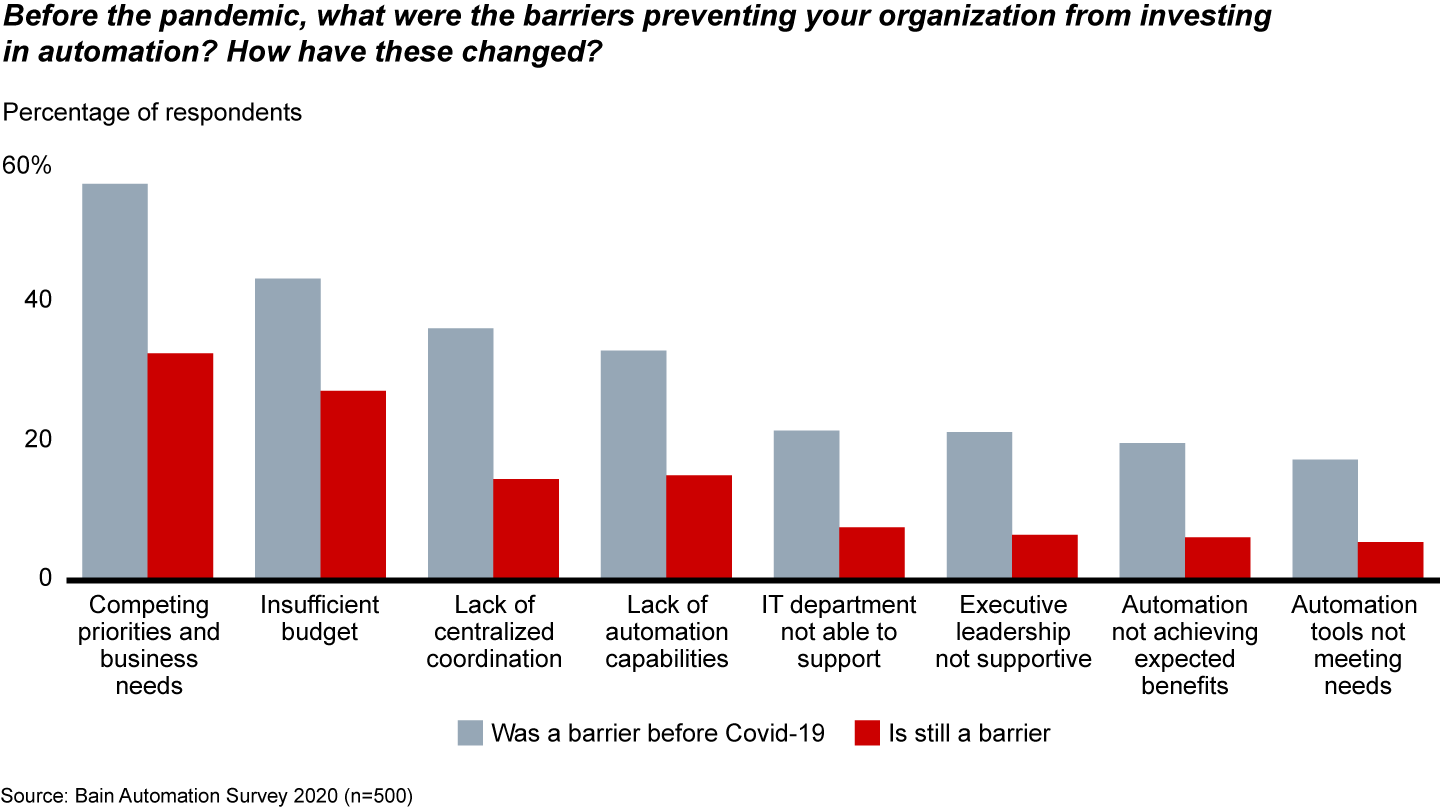

It’s unclear whether the favorable conditions on the ground will change once companies recover from the pandemic. What is clear is businesses have an opening now to accelerate their automation programs.
The problem: Many say they aren’t ready for it. Only 10% of surveyed companies believe they’re highly prepared to address the HR and change management challenges that automation will create; 11% say they aren’t prepared at all to respond to those workforce issues. For their part, technology companies say they’re better-prepared than most sectors, but that doesn’t mean they won’t encounter difficulties.
Our analysis of the survey responses and the characteristics of successful automation programs suggests three key principles to take full advantage of automation:
First, think big about how automation can deliver a competitive edge. Many companies deploy automation one use case at a time, and many projects are required to quickly pay for themselves through cost savings or new revenue, often within the first year of deployment. Cautious testing and learning, followed by rapid scaling, works well during stable times. But the Covid-19 crisis has created a rare opening for executives to think big about what can be automated and the value it could bring. Leading firms are challenging their long-held beliefs about why automation may or may not work in their organization. They’re automating more complex activities than just back-office processes and customer service desks.
Second, treat automation as a major change to manage actively from the start. The barriers to automation are falling, but that doesn’t mean companies can cut corners in planning and executing their automation strategy. Success in automation requires more than great technology. It starts with strong C-level sponsorship, so that automation remains a priority and everyone is held accountable for achieving the company’s ambitious targets.
The most effective change programs engage the key stakeholders, including IT, in early, open and direct communication. The senior team must demonstrate beforehand and in detail how automation will change the experience of employees and customers for the better; otherwise, many employees naturally will resist. Good communication, together with retraining programs, can help people start moving toward new career paths, including those within the same company.
The economic downturn will constrain budgets, so choosing the wrong funding model could stifle adoption. Asking business units to fund their own investments works well when a company’s automation capabilities are mature, demand from the businesses is high, and accountability for the return on investment is essential. Conversely, a centrally funded model might make more sense if a company doesn’t have a proven track record or healthy demand for automation.
Third, spend as much, if not more, time on what comes after automation. Beyond developing, testing, deploying and maintaining the technology, what really matters is achieving the expected business outcomes from the automation. In this respect, it’s similar to outsourcing. Beyond selecting the right partner, negotiating a competitive contract and transitioning the work to the provider, the organization left behind must be sized correctly and fit for purpose, or else the savings from outsourcing won’t materialize.
The risk is even higher for automation because much of the work automated consumes only a fraction of each employee’s time. Companies have to redesign the jobs affected by automation, or they won’t be able to achieve their goals.
What comes next
After the events of this year, many executives see automation as a critical asset that can strengthen their businesses and give them a strategic advantage.
Now comes the hard part. Before the pandemic, nearly half of automation projects failed to deliver the expected savings, according to a 2019 Bain survey. Although the situation on the ground has changed and traditional barriers to automation are coming down, companies still have their work cut out to turn its promise into reality. But the rewards could be substantial.
First published in 10月 2020