

M&A Report

At a Glance
- Small brand deals account for 75% of M&A volume among top consumer goods companies, up from less than 50% a decade ago.
- By focusing on the few things they need to get right, some large consumer goods companies have built successful portfolios through serial small-brand acquisitions that have outperformed their base business.
- Winners recognize how insurgent brand deals are unique, they tailor their M&A playbook accordingly, and they build the repeatable capabilities to do those deals frequently and successfully. Clarity on the distinctive parenting advantage is critical to unlocking value creation.
- Consumer goods companies that are frequent acquirers outperform their peers, with twice the sales growth rate, 1.8 times profit growth, and 1.2 times TSR growth than the industry average.
This article is part of Bain's 2022 M&A Report.
Large consumer goods companies have been losing out in the race for growth, and M&A is high on their agenda as they seek to reignite top-line performance. Despite overall annual market growth of 4% from 2012 to 2019, the 30 largest consumer goods companies grew less than 1%, a growth gap further widened by Covid-19. Meanwhile, prior to the pandemic, insurgent brands captured more than 30% of the growth across the categories in which they exist, despite accounting for only 3% of market share.
Growth is key to boosting shareholder returns in consumer products. Our research shows that every additional percentage point of growth acquired is rewarded by higher enterprise value (EV). That’s why large consumer goods companies are buying small, high-growth brands in record numbers. These growth-focused scope and capability deals now account for 75% of M&A volume among top consumer goods companies, up from less than 50% a decade ago. This increased activity is driving greater competition for attractive assets.
Because the cost synergies are lower in scope and capability deals than they are with larger scale transactions, there is extra pressure to deliver.
With increased competition comes higher price tags. Average multiples for consumer product deals have increased from 14 times EV/EBITDA in 2020 to 16 times EV/EBITDA in 2021. And because the cost synergies are lower than they are with larger scale transactions, there is extra pressure on these deals to deliver.
Unsurprisingly, many acquirers are asking, “How do we make sure that these small, expensive deals deliver their full potential?”
Tapping into insurgent brand growth
With high-growth synergies baked into the deal thesis of small-brand acquisitions, acquirers often are disappointed with post-acquisition growth rates. We analyzed the performance of 56 insurgent brands that were acquired between 2014 and 2019 and found average growth rates slowed by 50% post-acquisition (see Figure 1).
Figure 1
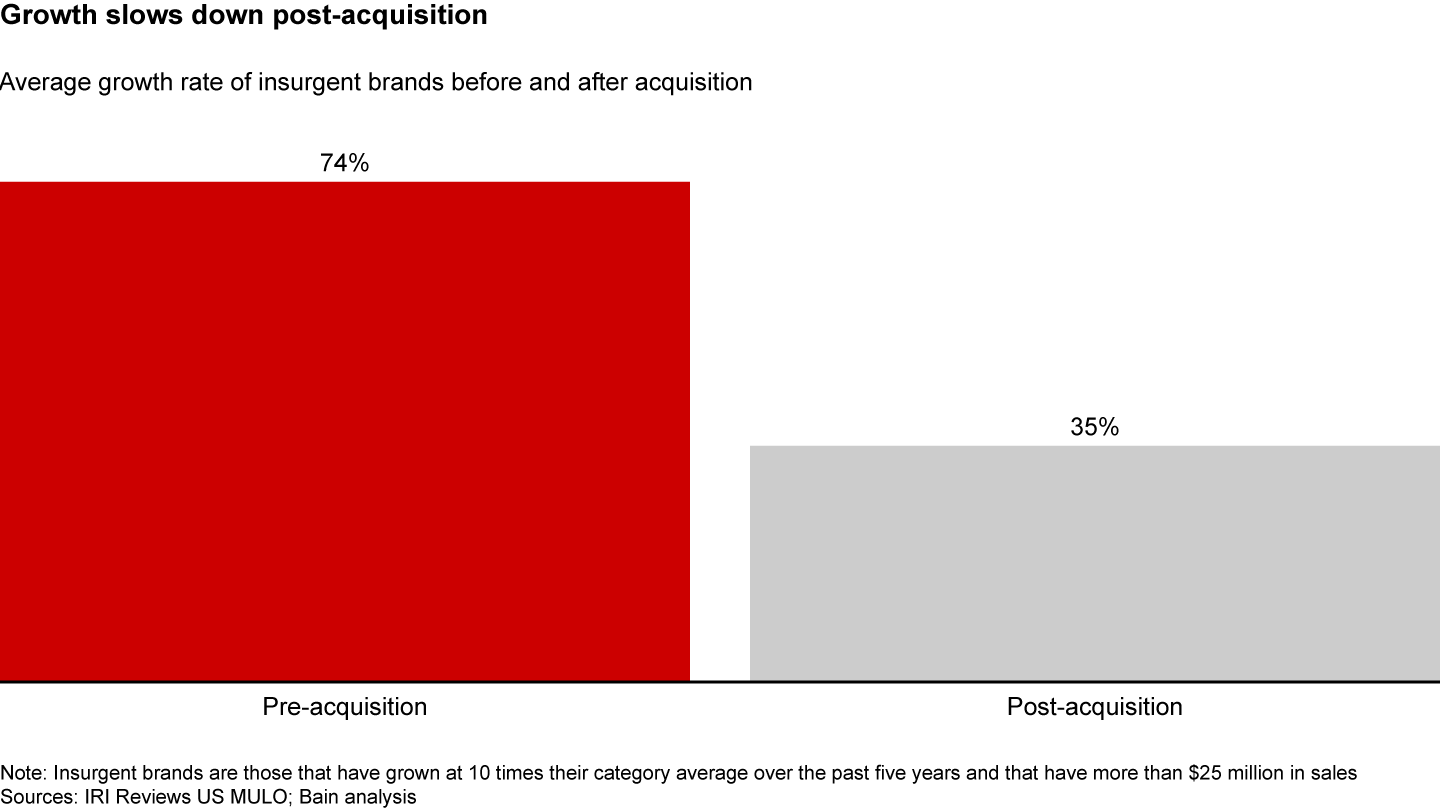

While that slower average growth still represents 15 times that of incumbent brands, it falls short of what acquirers expect. Some of the slowdown is natural as brands become larger. Much of it, however, is preventable.
When done right, we see these deals generate substantial value and improve an incumbent’s core organic growth profile. L'Oréal, AB InBev, and others have built successful portfolios through serial small-brand acquisitions that have either outperformed their base business or disproportionately increased overall growth rates relative to their size.
The successful acquirers of small high-growth assets have a tried-and-tested approach that focuses on getting a few key things right: They recognize how insurgent brand deals are unique, they tailor their M&A playbook accordingly, and they build the repeatable capabilities to do those deals frequently and successfully. We’ll walk through each of these elements.
Successful acquirers of small high-growth assets have a tried-and-tested approach that focuses on getting a few key things right.
Recognizing that insurgent brand deals are unique
“We cannot treat small acquisitions as one-size-fits-all. Each has its own attributes and objectives that should inform what will work for that acquisition. Understanding what makes each deal unique is the key to successful acquisition,” says Bob Chernoff, senior vice president with Acelerada, Bimbo Bakeries USA.
First, the deal thesis is predicated on growth. Assessing and delivering revenue synergies is much harder than doing so for cost and requires having unique parenting advantages in place (see “Bringing Science to the Art of Revenue Synergies”). For example, for many large beverage players, access to nationwide cold-chain distribution enables acquired brands to reach new geographies and channels. Also, insurgent acquisitions often are part of a broader portfolio or platform strategy, making the deal harder to assess on a standalone basis.
Second, the acquirer needs to embrace the mission of the insurgent brand and gain a deep understanding of its growth model before it can design a suitable value creation and integration plan. Growth ambitions must balance the desire for aggressive expansion with the need for sustained brand health. Overexpanding the target’s brand too quickly to benefit from the parent’s distribution advantage often results in lower long-term growth. Bernardo Novick, head of ZX Ventures at AB InBev, says, “We believe strongly in founders. We are disciplined about giving small, rapid-growth businesses the breathing space to be entrepreneurial, and we have a system in place to make sure that they benefit from the scale of AB InBev where and when that becomes valuable.”
Third, talent and culture are critical to any deal, but they can be hard to assess. “There needs to be a good cultural fit between the two companies informed by shared values and compatible purposes,” says Chernoff.
Identifying key talent to retain is particularly critical in capability deals in which that talent forms the core of the deal thesis. “The challenge with managing the talent at insurgent brands is that the skill sets and personalities that lead to these brands breaking through and creating the early consumer connections and buzz are not typically the same skill sets and personalities that will make the most sense as those needed when the game shifts from securing new accounts, doors, and awareness to growing (and even defending!) the footprint you have,” explains Glenn Pappalardo, managing director with JPG Resources. “Creating and operating are two very different disciplines. Most people who are extremely good at one are not extremely good at the other.”
Understanding the longer-term intentions of the founder and how critical they are to the success of the business is key. Broadly communicating the reasons for the acquisition and the integration plan going forward helps avoid unwanted talent churn.
Finally, insurgent brand deals often are more complex and don’t tend to follow a typical deal process. For example, a small brand’s shorter track record means that performance data availability may be limited (and often in untracked alternative channels), requiring creative diligence techniques and data tools to compensate, such as Pyxis for online performance analytics. Increased competition from other buyers, such as private equity, and the availability of other forms of investment, such as initial public offerings and corporate venture capital, have led to higher multiples and therefore the need for greater conviction to make a deal work.
A small brand’s shorter track record means that performance data availability may be limited, requiring creative diligence techniques and data tools to compensate.
Tailoring the M&A playbook
To account for these differences, successful acquirers have tailored their traditional M&A playbook across each element of the value chain (see Figure 2).
Figure 2
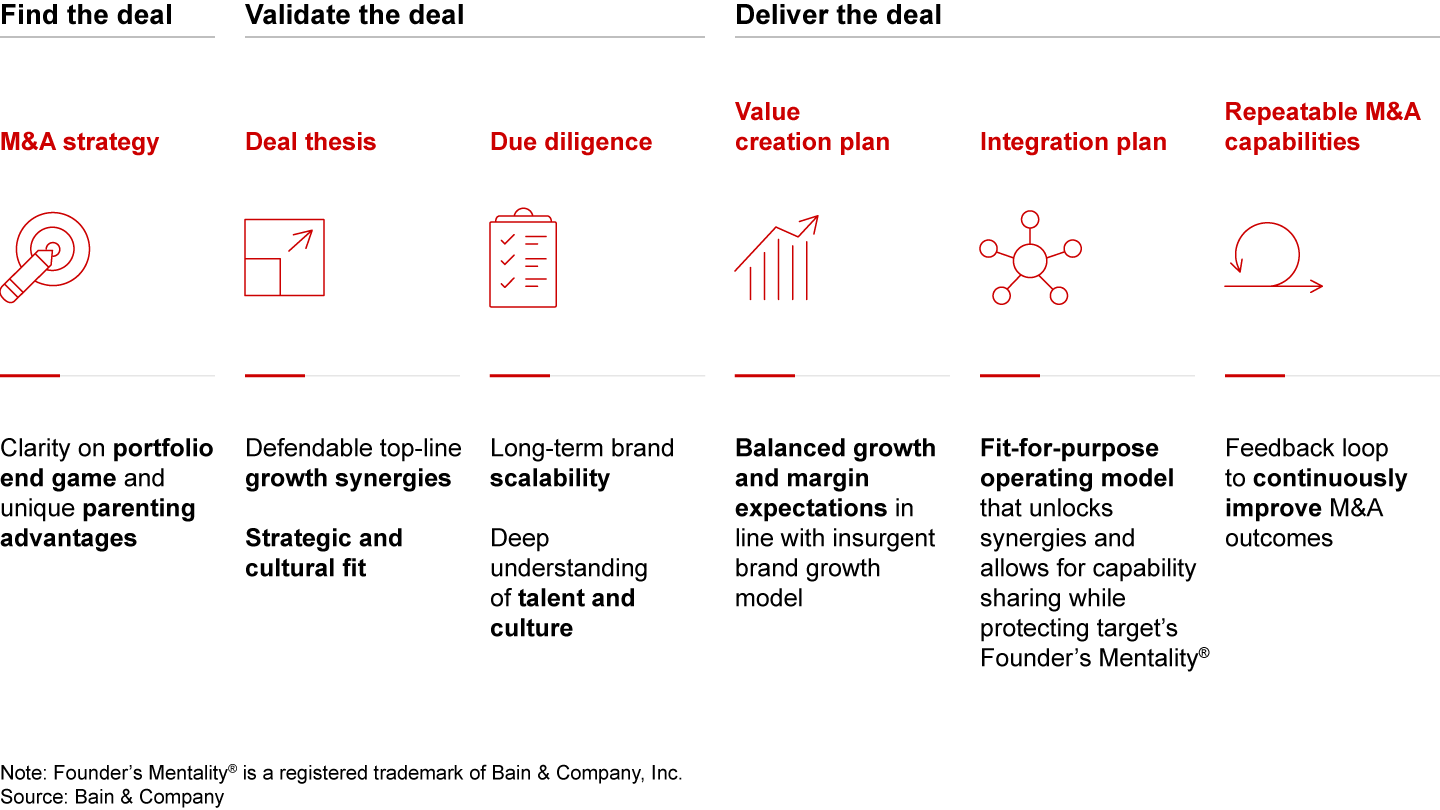

M&A strategy must be grounded in a future-back view of how the sector will evolve in order to determine the right portfolio play, assess a target’s potential to meet new consumer needs, and defend against emerging competitors in the long run. A few years ago, Hershey identified the disruption that reduced sugar and healthier eating habits would have on its business if it didn’t respond. The company set a larger vision for what Hershey could offer consumers by forming a better-for-you snacking platform alongside its core business, anchored with the acquisition of Amplify Brands, which has since bolstered its growth. Other confectionary players have reached similar conclusions. Recently Mars bought Kind, and Ferrero purchased Eat Natural.
The deal thesis should be tailored to the uniqueness of insurgent brands. Clarity on the distinctive parenting advantage is critical to unlocking value creation. Top-line growth synergies and expectations for capability transfers need to be defendable, and costs associated with scaling small-brand supply chains must be considered. The target’s culture, purpose, and strategic values in areas such as environmental, social, and corporate governance must fit with the acquirer’s own (see “The ESG Imperative in M&A”). There should be a clear plan for the founder’s future role as well as what should be integrated and what should be kept separate.
At a time when so many deals rely on the ability to retain talent, the diligence needs to rigorously assess talent and cultural issues, identifying departure risks early.
Due diligence must stretch beyond the traditional financial boundaries to test a target brand’s long-term growth potential and scalability. Among the questions to answer:
- Is this a true consumer need or just a fad?
- Can the brand stretch into adjacent markets?
- How strong are the target’s commercial capabilities?
- What competitive threats exist, particularly among newer emerging brands?
And at a time when so many deals rely on the ability to retain talent, the diligence needs to rigorously assess talent and cultural issues, identifying departure risks early (see “Reimagining Talent in M&A”).
The value creation plan should set realistic growth expectations to avoid the risk of overpaying and overstretching the brand to compensate. Acquirers need to apply the insurgent growth model, which includes an emphasis on driving velocity and not just distribution. This requires planning for how capability transfer can improve the base business—and what it will take. And margin expectations must be managed, recognizing that there may be higher initial costs and that price pressures will come into effect as distribution scales.
The integration plan should ensure that the resulting operating model protects and even strengthens the target’s Founder’s Mentality® while unlocking parenting advantages. “The biggest learning is the need to be very thoughtful in the approach to integration, making sure to leverage the skills and benefits of the larger company without negatively impacting the nimbleness and entrepreneurial spirit that are key to the growth and authenticity of the acquired brand,” explains Chernoff. “At times, that means very limited integration and keeping a dedicated leadership team in place for the business. In other instances, this means integrating elements of the business where they can benefit from our capabilities while locking in key talent early enough to ensure a smooth transition.”
Building repeatable M&A capabilities
Consumer goods companies that are frequent acquirers outperform their peers, with twice the sales growth rate, 1.8 times profit growth, and 1.2 times total shareholder return (TSR) growth than the industry average. The benefit to building repeatable M&A capabilities is even more true for acquirers that are generating a regular flow of small deals. “Over the past six-plus years, we have developed a proprietary set of metrics to assess potential acquisitions based on their stage of growth and their business model. Learnings from other deals we’ve done is part of what makes us a successful investor,” explains Novick.
Incumbents need to apply an always-on approach to scanning the market and deal flow activity. “Consumer goods companies that do this well create the deal flow,” says Pappalardo. “They build relationships with promising insurgents long before they even know they want to sell.” And they can quickly assess a target’s potential fit, often with limited data. This requires tapping into alternative data sources, building a broader ecosystem of experts, and developing creative primary research solutions. Post-deal, protecting the asset from a large company’s bureaucracy requires running lean, targeted, decision-driven integrations rather than traditional broadscale M&A processes.
Given that many insurgent deals are part of a series of acquisitions to build a broader portfolio, creating those repeatable capabilities pays off over time. Winning acquirers establish learning loops and regularly reassess to improve their M&A performance.
Ultimately, at a time when the growth gap is widening, incumbent brands need small-brand deals to recapture top-line growth and boost TSR. While challenging to get right, these acquisitions can deliver substantial value. Success requires a clear understanding of what makes insurgent assets unique; an updated M&A playbook; and new, repeatable capabilities.
Read our 2022 M&A Report
Overview
Hot Topics
Industry Views
Regional Perspectives
First published in 2月 2022