

レポート

概要
- Scope dealmaking accelerated in 2019 and now represents roughly 60% of all large deals as companies stay motivated to buy into new growth areas and capabilities.
- Within scope, capability-driven deals have grown their share from 2% of large deals in 2015 to 17% in 2019.
- Executives consider scope deals to be at least as successful as scale deals.
- Some of the really large scope deals of 2019 look a lot like big-bet scale transactions, which carry more risks.
This article is Section 2.2 of Bain's 2020 Global Corporate M&A Report. Explore our latest annual M&A report here.
Scope dealmaking is accelerating across industries
Scope deals now account for roughly 60% of all strategic deals valued in excess of $1 billion. This is a trend we have seen accelerate over the past five years (see Figure 2.2). We believe this is in response to the low-growth environment and business model disruption across several industries (see “About the methodology” for more details on Bain’s approach to classifying approximately 1,200 strategic deals).
Figure 2.2


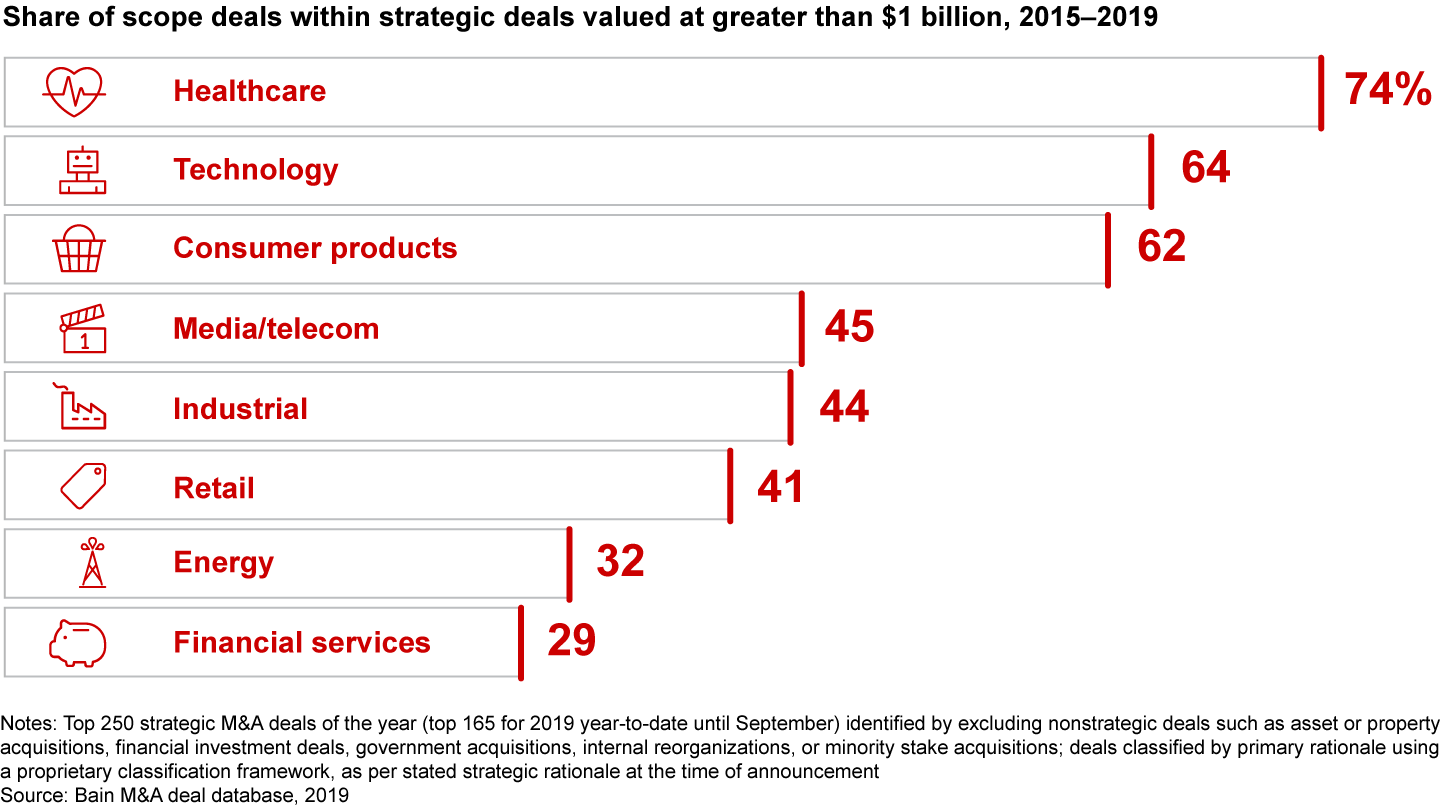
While scope dealmaking is prevalent across sectors, healthcare, technology and consumer products lead the charge (see Figure 2.3).
Consider the different flavors of scope deals across sectors. In healthcare, players bought their way into high-growth therapeutic areas such as oncology (Pfizer-Array BioPharma, Lilly-Loxo Oncology) and gene editing (Vertex Pharmaceuticals-Exonics Therapeutics). Some also acquired digital capabilities—for example, Johnson & Johnson purchased Auris Health to develop a combined robotics surgery portfolio.
Within technology, the financial technology subsector saw three blockbuster deals with similar rationales in which traditional card payment processors acquired merchant-side capabilities: Fidelity National-Worldpay, Fiserv-First Data and Global Payments-Total System Services. Large technology companies also invested in high-value data science and analytics capabilities to add to their offerings. Salesforce bought Tableau for its data visualization platform, and Google bought Looker Data Sciences, which specializes in analytics and machine learning.
Consumer products saw a mix of growth and capability acquisitions. Companies invested in direct-to-consumer channel capabilities (Edgewell-Harry’s in razors, Natura-Avon in beauty products), high-growth product lines and channel capabilities (Colgate-Filorga in premium skincare), and portfolio diversification across markets and price points (Saputo-Dairy Crest, E.&J. Gallo Winery-Constellation Brands’ value wine and spirits portfolio).
Figure 2.3

Scope M&A is an increasingly common way to buy capabilities
This year, nearly one out of five large strategic deals were capability-driven deals made to strengthen an existing competitive advantage, target digital opportunities or redefine the company through cross-sector or cross–value chain moves. Later in the report, we discuss how astute acquirers are using capability deals in support of their strategy, the unique characteristics of these deals and what a successful integration approach looks like.
While we examined deals that were greater than $1 billion in value, we know that a majority of capability deals are much smaller in size. Likely, there is a lot more of this type of dealmaking than we see in our numbers.
In fact, as they seek emerging technologies and new business models, companies are pursuing other capital- and risk-efficient routes, such as minority stake investments, corporate venture capital (CVC) and partnerships, in addition to M&A. This comes with its own set of complications arising from lower control, diverging partner objectives and the sheer complexity of managing multiple investments. While we don’t examine these challenges in detail in this report, we see our clients facing new issues that they do not face with traditional M&A. Certainly, developing the capability to nimbly leverage and manage these different approaches will become increasingly important in the coming years.
Not yet the end game for scale deals
None of this means that it’s time to forget about scale deals. With the strong growth of scope deals in recent years, we could easily gloss over the fact that scale dealmaking still accounted for about 40% of all deals valued at more than $1 billion in the year ending September 2019. In many industries, such as financial services, manufacturing and natural resources, where further consolidation is feasible, scale deals remain an effective way to stave off earnings pressures for the short term. In others, such as media and telecom, digital disruption is actually causing incumbents to join forces and use their combined scale to invest in new capabilities.
Although scope deals have grown their share, scale deals remain a proven route to building and extending a leadership position in chosen businesses. Would a recession scenario lead to a return to scale dealmaking? Certainly, deal math based on near-term earnings growth enabled by tangible cost synergies could be back in favor. In more commoditized and scale-driven industries, there may be more targets coming on the market, and regulators may take a more lenient stance than they recently have taken. It remains to be seen how the deal mix would develop in a downturn or recessionary scenario. What’s clear is that winners out of a downturn will use scale M&A, scope M&A and divestitures to change their structural market positioning.
Are scope deals successful?
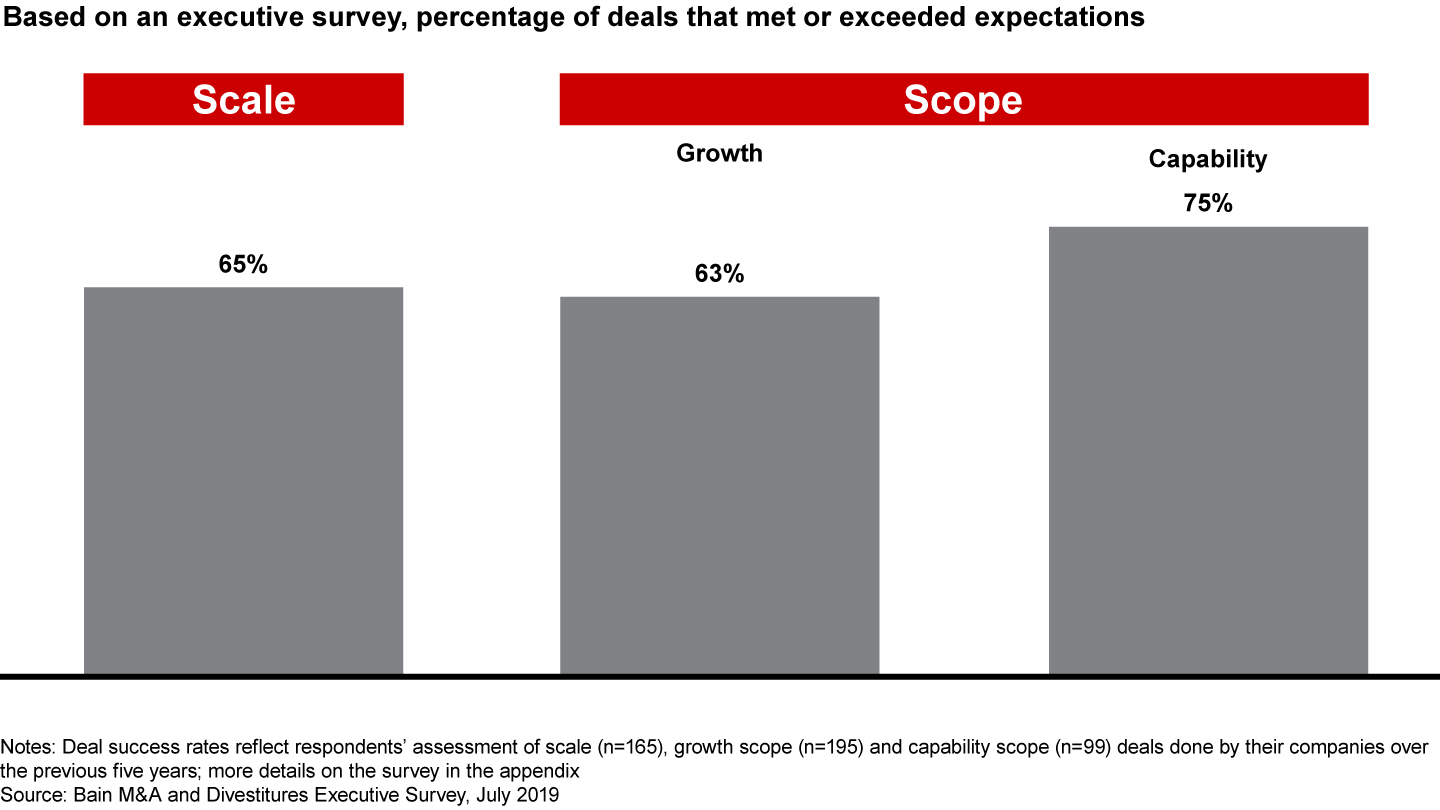
As scope deals stake their claim in today’s M&A landscape, the natural question arises: Are these deals a good idea? We increasingly hear this question, so we decided to pose it to a group of nearly 250 senior executives with deep experience in M&A. The executives’ perception is that M&A is generally a successful endeavor and that scope deals are at least as successful as scale deals (see Figure 2.4). Respondents believe that, on average, roughly 63% of growth scope deals met or exceeded expectations and created value for the company. This is similar to the results for scale deals. Capability deals are even more successful, with 75% of deals seen as creating value.
With these rates of perceived success, it is no surprise that more than 80% of executives expect to do more scope deals in the future.
This finding is based on our respondents’ self-assessment of deal success and not backed by an analytical study.
Figure 2.4

Another way to answer the original question of “are scope deals successful?” is to look at what successful acquirers do. We noted in our 2019 M&A report that, over a 10-year period, frequent acquirers’ average total shareholder return (TSR) was 27% higher than infrequent acquirers’ average TSR. (TSR is defined as stock price changes assuming reinvestment of cash dividends.) Frequent acquirers also make relatively more scope acquisitions. When considering deals worth more than $1 billion over the past five years, scope deals represent 60% of frequent acquirers’ deal mix vs. 40% for infrequent acquirers. Frequent acquirers use scope M&A as part of their repeatable playbook to enter new growth businesses and acquire new capabilities, such as technology, intellectual property (IP) and talent, to further reinforce their leadership.
At a time of disruption, it may be tempting for many companies to rely on scope deals to chase growth. But rushing into scope deals carries risks if not backed by a cohesive strategy and accumulated experience. Such caution is most critical for the really large scope deals we started to see in 2019.
What about the really big scope deals?
This year established that capability M&A is no longer limited to small deals. We even saw several capability megadeals—that is, in excess of $10 billion.
Despite acquirers’ experience and executives’ best intentions, larger deals, scale or scope, sometimes don’t work out as planned. Some recent deal failures are raising valid questions around the success of large scale and scope deals alike.
As we know, deals fail in the beginning, not the end, and the failure warnings are already there in the diligence process. Later in this report, we discuss how the best acquirers are adapting their diligence approaches to improve their odds of success.
Scope deals represent tremendous potential and opportunity for firms to transform and leapfrog the competition, but realizing this vision requires breaking the traditional molds of thinking across the entire M&A process, from screening to diligence to integration. Acknowledging this fundamental shift in thinking is step zero for success—companies that are willing to change their approach will earn greater success with scope deals.
In Section 4 of this report, we explore some of the new approaches for scope deals:
- How can companies efficiently search for growth and capability assets outside of traditional business boundaries yet within the guardrails of their overall strategy and distinct capabilities?
- How can acquirers best perform diligence on a less-familiar sector and business model, including diligence on technological capabilities, IP assets and talent?
- How can acquirers tailor integration to realize the value that sits at the intersection of the organizations while minimizing the risks in getting people from two different business cultures to work together?
This article is part of Bain’s 2020 Global Corporate M&A Report. Explore the contents of the report here or download the PDF to read the full report.
-
About the methodology (Click to expand)
About deal classification—scale and scope deals
To understand the nature of M&A activity, we first identified the top 250 strategic deals of each year (top 165 strategic deals for 2019 year-to-date until September, since the analysis was concluded in October). From the initial list of deals with values greater than $1 billion, as reported by Dealogic, we excluded nonstrategic deals. These include asset or property acquisitions, financial investments, internal reorganizations, and minority stake acquisitions.
We then classified the strategic deals into scale or scope deals based on our proprietary framework applied consistently across the years. The proprietary framework uses the stated strategic rationale by the acquirer at the time of announcement to identify the key elements of the deal thesis. Based on these elements, the deals were categorized as scale or scope deals.
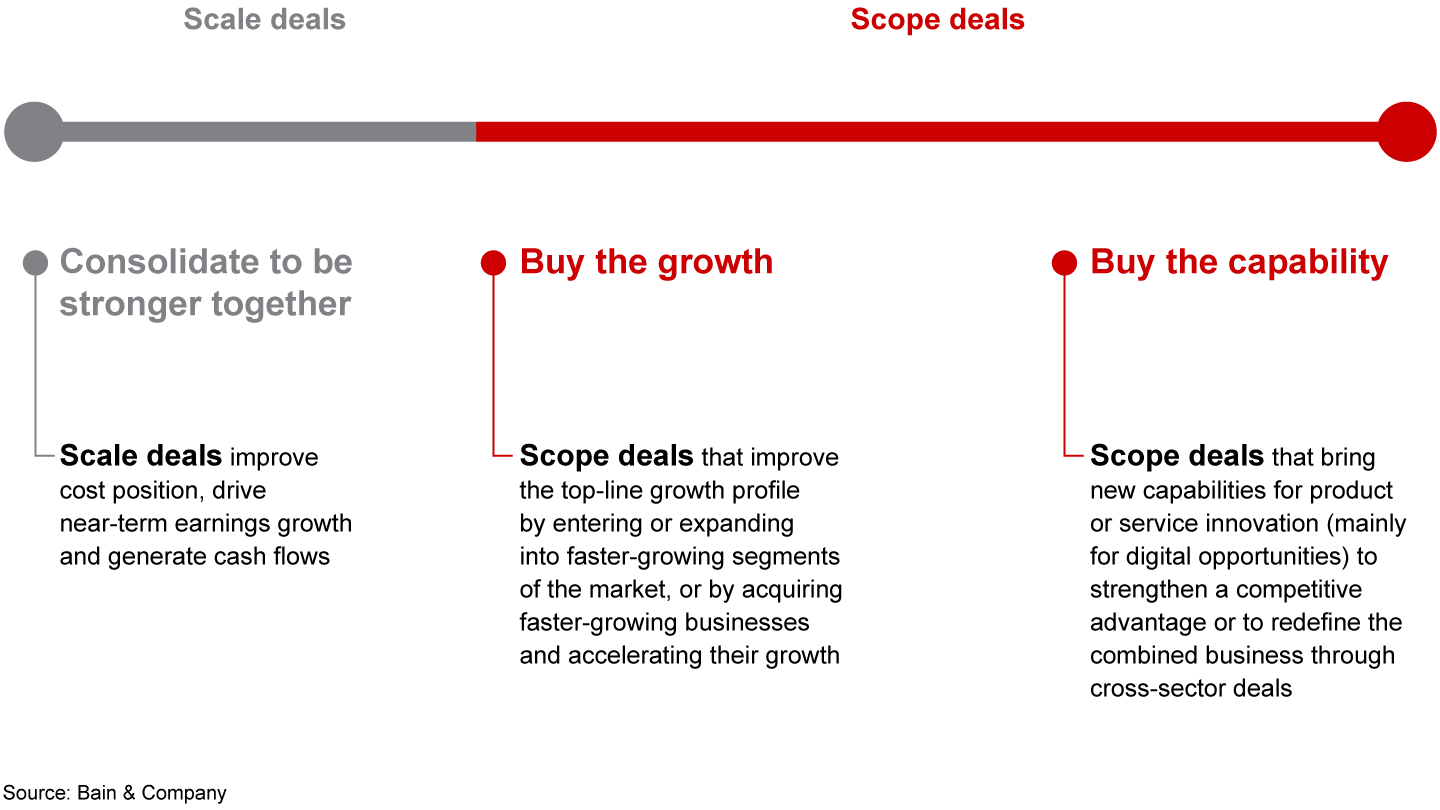
Scale deals are intended to strengthen market leadership and lower cost position through the benefits of scale, such as cost synergies. Scope deals are intended to accelerate top-line growth by entering or expanding into faster-growing market segments, or by bringing in new capabilities. In reality, some deals are a blend of both scale and scope; however, the vast majority lean toward one or the other (see chart).


First published in 1月 2020