

Global Machinery & Equipment Report

At a Glance
- Industry is now a bigger consumer of chips and Internet of Things technology than any other sector.
- Successful machinery companies design digital solutions for customer segments in which they are a leading supplier.
- Emerging leaders in digital solutions for machinery outperform the industry on total shareholder return by 100%.
This article is part of Bain's Global Machinery & Equipment Report 2024
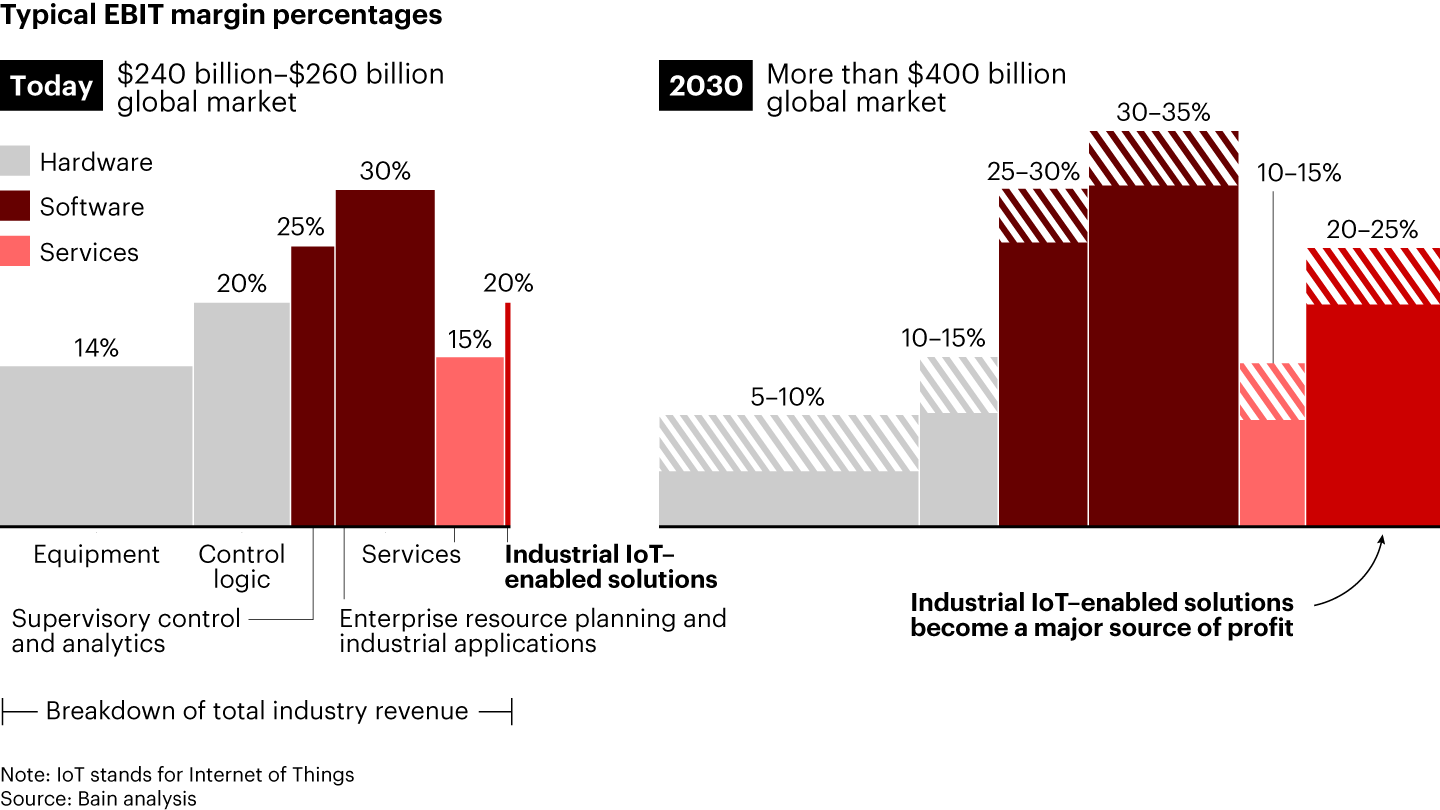
It’s the moment of digital truth for machinery and equipment makers. Though digital solutions in industry have taken longer to mature than anticipated 10 years ago, change is now accelerating at a pace that risks leaving some companies unable to catch up. As digital solutions proliferate, they are creating seismic shifts in machinery and equipment profit pools and market dynamics (see Figure 1).
Figure 1

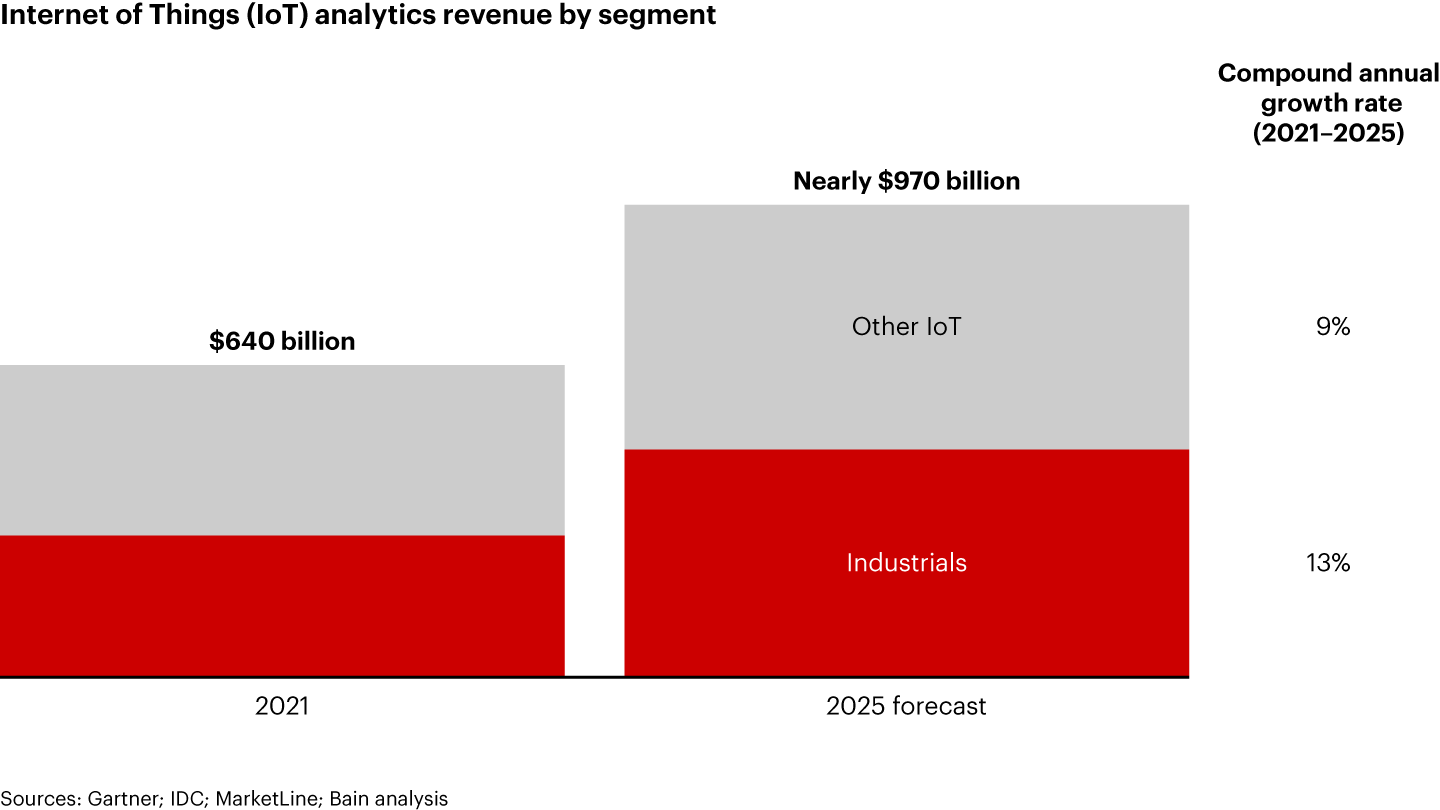
A key indicator of the pace of change is the industry’s voracious consumption of semiconductor chips and Internet of Things (IoT) technology. The industrial sector is now a bigger consumer of chips and IoT technology than any other sector. And industrial companies’ spending on IoT is growing at a higher rate than that of any other sector (see Figure 2).
Figure 2

The push to develop solutions has prompted leading machinery companies to redefine their markets. Instead of producing standard products for a global market, many are developing customer solutions tailored to specific industries. That pivot means focusing on a smaller number of customers in specific vertical industry segments, but it increases the scope of what these leaders can offer those customers—it also means less fragmented supply chains.
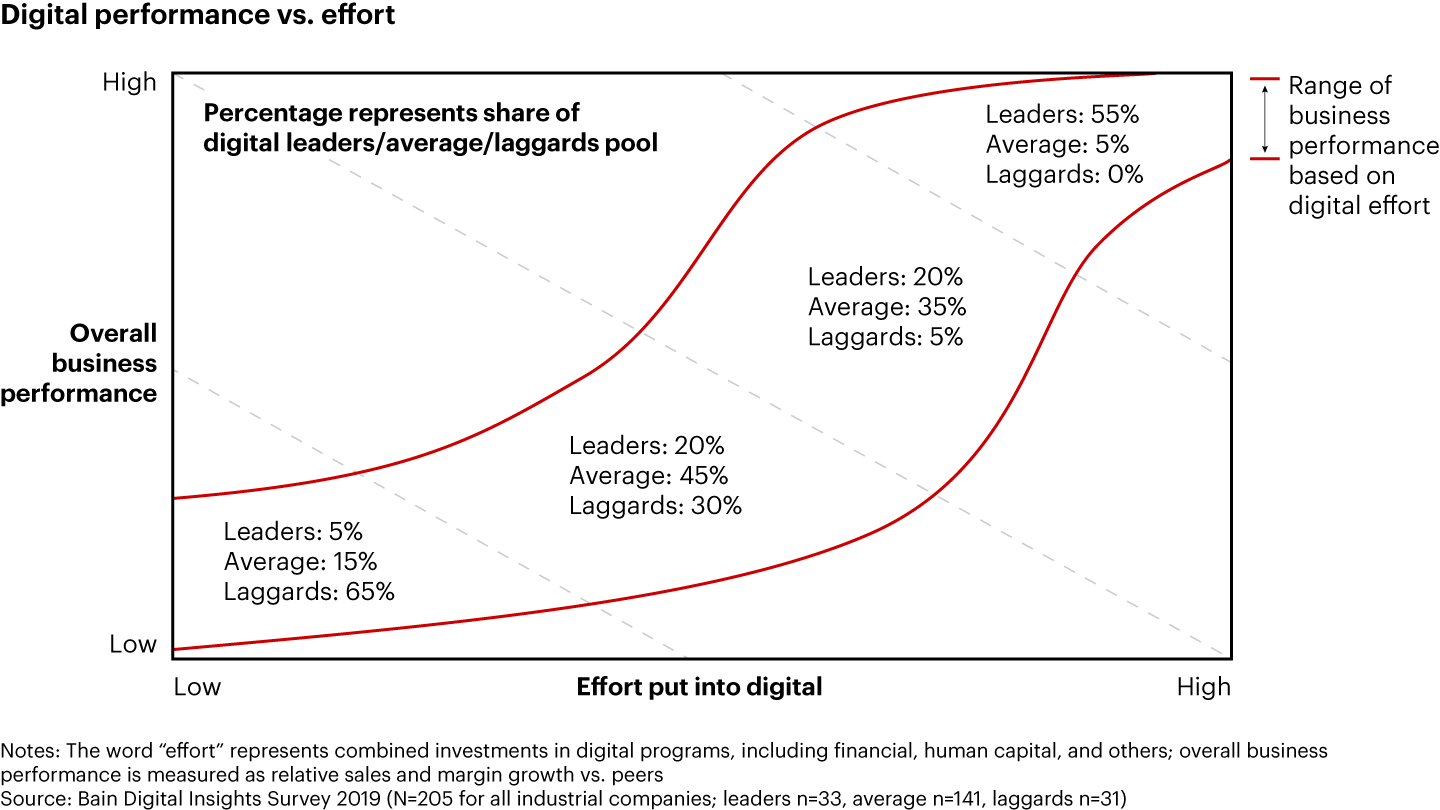
The shift to digital solutions is the most sweeping change to the industry in a lifetime for many machinery executives. But for those that get it right, the payoff is huge. Digital solutions leaders already outperform the industry on total shareholder return by 100%. Customers are seeking these solutions as part of their strategic evolution. Machinery companies that are among the first to meet that demand will generate higher revenue, bigger margins, improved customer loyalty, and software-like valuation multiples (see Figure 3).
Figure 3

The pitfalls
In our experience, three common pitfalls often hinder machinery companies’ efforts to develop digital solutions. The first is failure to clarify the company’s ambition in digital solutions. In short, why invest? As they rush to join the race, many engineer digital products and services to sell more hardware and equipment instead of conceiving new offerings for unsolved customer needs. As a result, their solutions are less competitive and produce disappointing results. Worse, these companies continue to focus on traditional product markets while rivals reshape the competitive landscape. That approach risks leaving these companies lagging the pack.
The second pitfall is lack of focus on selected customer groups. Narrowing a firm’s focus on a few target markets is one of the biggest challenges leadership teams face in the transition to digital solutions. Companies that engineer software products and solutions without targeting a few industry verticals will be overwhelmed by the heterogenous demands of multiple industries. To compete, they will be forced to redesign or reengineer solutions from one company to the next. These companies won’t be able to scale their solutions. As a result, they won’t be profitable.
It's understandable that machinery companies have a reflex to build solutions broadly for all industries. Until now, many have sold standard equipment globally to a heterogenous base of customers. But that’s the reason these companies lack, with few exceptions, enough domain and application competence to develop digital solutions for every industry. A leading producer of robots, for example, won’t necessarily understand what it requires for its robots to work optimally in different industrial environments such as an automotive assembly line, medical lab, or food processing plant.
Emerging digital leaders are targeting customer segments in which they have the greatest domain know-how. Some machinery and equipment companies have significant domain know-how. Others, such as ABB, build motors or robots used in a variety of industries. Machinery makers that sell to multiple industries have the greatest challenge building domain know-how.
The third common pitfall is failing to figure out how to build a digital solutions business that can become a robust second engine for the company—a technology-based engine as opposed to a product engine. Often companies start by pursuing ventures or experiments in digital solutions outside the organization. Such ventures, disconnected from the main business, typically prove impossible to scale because the solutions are not integrated into the business.
The customer mindset
Most machinery original equipment manufacturers (OEMs) today have some digital solutions in their offering. But scaling them successfully requires significant investments, a multiyear transformation, and a customer mindset. Leaders start by answering two vital questions: For which customers are we among the most relevant suppliers, and what solutions would solve the problems these customers face? Software companies excel at this customer-centric market approach; indeed, it has propelled their success over the past 20 years. Machinery companies that lead the digital solutions shift will do the same over the next two decades.
John Deere, for example, has invested billions of dollars over the past decade to pivot from tractor manufacturer to a provider of solutions for precision agriculture, including machines combined with digital technology that make farming more efficient. In 2022, the company introduced self-driving tractors and sprayers that can distinguish weeds from crops. The company is now planning to connect 1.5 million machines in service and use its cloud-based operations center to store crop data, hoping to sell farmers subscriptions to software that will help yield higher profit margins.
Similarly, Hilti is transforming itself from a maker of power tools to a digitalization partner for midmarket contractors. To build its digital muscle, the company made two large acquisitions, including one for more than $300 million. It also has invested several hundred million dollars in its own R&D and go-to-market capabilities, adding solution consultants and systems integration capabilities.
In our experience, machinery companies that have built successful digital solutions follow five guidelines:
- Target a few customer segments. Leaders in digital solutions address customer pain points in select vertical markets. Thermostat maker Danfoss provides solutions to food supermarkets that depend on reliable refrigeration. In addition to selling systems that monitor the temperature of refrigerated storage areas and shelves, the company’s connected thermostats also offer solutions for energy management, usage analytics, and predictive maintenance.
- Become a digitalization partner. Digital solutions, such as software, change the way a company works. Software companies use teams of expert advisers to help customers adapt their ways of working and ensure that they get the full benefits of the technology they install. Machinery companies offering digital solutions also need to provide presales consultation to help customers understand how digital solutions will change their operations. Leaders offer success management services to ensure that customers are getting the most out of installed solutions. Hilti, known for its red drilling tools, has expanded its direct salesforce model to include software consultants in order to offer IoT and technology solutions.
- Embrace customer unit economics. Machinery and equipment companies build business plans based on product unit economics, ensuring that the price of a machine covers the costs of building it. Digital solutions, such as software, require a different approach as the biggest cost is not building the product but acquiring customers. Leading machinery companies create a business case for digital solutions based on customer unit economics, including the cost of acquiring customers and customer lifetime value. That ensures the business case is sound. (The bad news: It’s not a fast payback). Take the case of electric vehicle maker Tesla, which has pioneered a new business model for automotive OEMs. In addition to selling cars, Tesla offers drivers additional digital solutions throughout the product life cycle, including an extensive charging network, entertainment services, and autonomous driving packages. These solutions help Tesla maintain an electric vehicle market share of greater than 50% in its core US market.
- Invest in an Engine 2 business. Successful machinery companies use both organic investments and acquisitions to build a substantial technology-based business that can complement hardware sales. Partnerships offer the greatest value in back-end operations with solution development and delivery. Leaders, including John Deere, avoid outsourcing customer-facing parts of the business. The reason is clear: Sector-specific knowledge and customer relations play a key role in winning sales and retaining core customers.
- Use open technology architecture. Digital solutions that are built on flexible technology architecture have a big advantage in the market—seamless integration and interoperability with leading IT systems and operations technology (OT). Open technology architecture also complies with security standards. Schneider Electric recently acquired Aveva, a leader in software for engineering and operations, including the creation of digital twins of industrial machinery. Aveva’s software integrated smoothly with Schneider’s market-leading IT/OT open architecture and EcoStruxure platform, which connects data and applications from the shop floor to the C-suite. To provide tailored solutions to industry verticals or customers, Schneider has made additional acquisitions (e.g., ETAP) and developed customer solutions for specific use cases on top of its EcoStruxure platform.
The digital transformation of machinery is well underway. Leading OEMs are forging deeper relationships with their best industrial customers and developing solutions for the industry segments in which they are a leader. Future winners will scale solutions that can be used repeatedly in the same sector with minor adaptations from one customer to the next. As that process accelerates, it will change the competitive boundaries of the industry: Future markets will be defined by customer segments, not products. In this new era, machinery companies that have scaled digital solutions for a targeted set of customers will have a competitive advantage that is difficult to challenge.
Read our Machinery & Equipment Report 2024
More from the report
First published in 4月 2024