
Skip to Content
  • オフィス

    オフィス

    北米・南米
    • Atlanta
    • Austin
    • Bogota
    • Boston
    • Buenos Aires
    • Chicago
    • Dallas
    • Denver
    • Houston
    • Los Angeles
    • Mexico City
    • Minneapolis
    • Monterrey
    • Montreal
    • New York
    • Rio de Janeiro
    • San Francisco
    • Santiago
    • São Paulo
    • Seattle
    • Silicon Valley
    • Toronto
    • Washington, DC
    ヨーロッパ・中東・アフリカ
    • Amsterdam
    • Athens
    • Berlin
    • Brussels
    • Copenhagen
    • Doha
    • Dubai
    • Dusseldorf
    • Frankfurt
    • Helsinki
    • Istanbul
    • Johannesburg
    • Kyiv
    • Lisbon
    • London
    • Madrid
    • Milan
    • Munich
    • Oslo
    • Paris
    • Riyadh
    • Rome
    • Stockholm
    • Vienna
    • Warsaw
    • Zurich
    アジア・オーストラリア
    • Bangkok
    • Beijing
    • Bengaluru
    • Brisbane
    • Ho Chi Minh City
    • Hong Kong
    • Jakarta
    • Kuala Lumpur
    • Manila
    • Melbourne
    • Mumbai
    • New Delhi
    • Perth
    • Shanghai
    • Singapore
    • Sydney
    • Tokyo
    全てのオフィス
  • アルムナイ
  • メディア
  • お問い合わせ
  • 東京オフィス
  • Japan | 日本語

    地域と言語を選択

    グローバル
    • Global (English)
    北米・南米
    • Brazil (Português)
    • Argentina (Español)
    • Canada (Français)
    • Chile (Español)
    • Colombia (Español)
    ヨーロッパ・中東・アフリカ
    • France (Français)
    • DACH Region (Deutsch)
    • Italy (Italiano)
    • Spain (Español)
    • Greece (Elliniká)
    アジア・オーストラリア
    • China (中文版)
    • Korea (한국어)
    • Japan (日本語)
  • Saved items (0)
    Saved items (0)

    You have no saved items.

    後で閲読、共有できるようにするためにブックマークしてください

    Explore Bain Insights
  • 業界別プラクティス
    メインメニュー

    業界別プラクティス

    • 航空宇宙、防衛、政府関連
    • 農業
    • 化学製品
    • インフラ、建設
    • 消費財
    • 金融サービス
    • ヘルスケア
    • 産業機械、設備
    • メディア、エンターテインメント
    • 金属
    • 採掘・鉱業
    • 石油、ガス
    • 紙、パッケージ
    • プライベートエクイティ
    • 公共、社会セクター
    • 小売
    • テクノロジー
    • 通信
    • 交通
    • 観光産業
    • 公益事業、再生可能エネルギー
  • 機能別プラクティス
    メインメニュー

    機能別プラクティス

    • カスタマー・エクスペリエンス
    • サステイナビリティ、 社会貢献
    • Innovation
    • 企業買収、合併 (M&A)
    • オペレーション
    • 組織
    • プライベートエクイティ
    • マーケティング・営業
    • 戦略
    • アドバンスド・アナリティクス
    • Technology
    • フルポテンシャル・トランスフォーメーション
  • Digital
  • 知見/レポート
  • ベイン・アンド・カンパニーについて
    メインメニュー

    ベイン・アンド・カンパニーについて

    • ベインの信条
    • 活動内容
    • 社員とリーダーシップ
    • プレス・メディア情報
    • クライアントの結果
    • 受賞歴
    • パートナーシップを結んでいる団体
    Further: Our global responsibility
    • ダイバーシティ
    • 社会貢献
    • サステイナビリティへの取り組み
    • 世界経済フォーラム(WEF)
    Learn more about Further
  • キャリア
    メインメニュー

    キャリア

    • ベインで働く
      キャリア
      ベインで働く
      • Find Your Place
      • ベインで活躍する機会
      • ベインのチーム体制
      • 学生向けページ
      • インターンシップ
      • 採用イベント
    • ベインでの体験
      キャリア
      ベインでの体験
      • Blog: Inside Bain
      • キャリアストーリー
      • 社員紹介
      • Where We Work
      • 成長を後押しするサポート体制
      • アフィニティ・グループ
      • 福利厚生
    • Impact Stories
    • 採用情報
      キャリア
      採用情報
      • 採用プロセス
      • 面接内容
    FIND JOBS
  • オフィス
    メインメニュー

    オフィス

    • 北米・南米
      オフィス
      北米・南米
      • Atlanta
      • Austin
      • Bogota
      • Boston
      • Buenos Aires
      • Chicago
      • Dallas
      • Denver
      • Houston
      • Los Angeles
      • Mexico City
      • Minneapolis
      • Monterrey
      • Montreal
      • New York
      • Rio de Janeiro
      • San Francisco
      • Santiago
      • São Paulo
      • Seattle
      • Silicon Valley
      • Toronto
      • Washington, DC
    • ヨーロッパ・中東・アフリカ
      オフィス
      ヨーロッパ・中東・アフリカ
      • Amsterdam
      • Athens
      • Berlin
      • Brussels
      • Copenhagen
      • Doha
      • Dubai
      • Dusseldorf
      • Frankfurt
      • Helsinki
      • Istanbul
      • Johannesburg
      • Kyiv
      • Lisbon
      • London
      • Madrid
      • Milan
      • Munich
      • Oslo
      • Paris
      • Riyadh
      • Rome
      • Stockholm
      • Vienna
      • Warsaw
      • Zurich
    • アジア・オーストラリア
      オフィス
      アジア・オーストラリア
      • Bangkok
      • Beijing
      • Bengaluru
      • Brisbane
      • Ho Chi Minh City
      • Hong Kong
      • Jakarta
      • Kuala Lumpur
      • Manila
      • Melbourne
      • Mumbai
      • New Delhi
      • Perth
      • Shanghai
      • Singapore
      • Sydney
      • Tokyo
    全てのオフィス
  • アルムナイ
  • メディア
  • お問い合わせ
  • 東京オフィス
  • Japan | 日本語
    メインメニュー

    地域と言語を選択

    • グローバル
      地域と言語を選択
      グローバル
      • Global (English)
    • 北米・南米
      地域と言語を選択
      北米・南米
      • Brazil (Português)
      • Argentina (Español)
      • Canada (Français)
      • Chile (Español)
      • Colombia (Español)
    • ヨーロッパ・中東・アフリカ
      地域と言語を選択
      ヨーロッパ・中東・アフリカ
      • France (Français)
      • DACH Region (Deutsch)
      • Italy (Italiano)
      • Spain (Español)
      • Greece (Elliniká)
    • アジア・オーストラリア
      地域と言語を選択
      アジア・オーストラリア
      • China (中文版)
      • Korea (한국어)
      • Japan (日本語)
  • Saved items  (0)
    メインメニュー
    Saved items (0)

    You have no saved items.

    後で閲読、共有できるようにするためにブックマークしてください

    Explore Bain Insights
  • 業界別プラクティス
    • 業界別プラクティス

      • 航空宇宙、防衛、政府関連
      • 農業
      • 化学製品
      • インフラ、建設
      • 消費財
      • 金融サービス
      • ヘルスケア
      • 産業機械、設備
      • メディア、エンターテインメント
      • 金属
      • 採掘・鉱業
      • 石油、ガス
      • 紙、パッケージ
      • プライベートエクイティ
      • 公共、社会セクター
      • 小売
      • テクノロジー
      • 通信
      • 交通
      • 観光産業
      • 公益事業、再生可能エネルギー
  • 機能別プラクティス
    • 機能別プラクティス

      • カスタマー・エクスペリエンス
      • サステイナビリティ、 社会貢献
      • Innovation
      • 企業買収、合併 (M&A)
      • オペレーション
      • 組織
      • プライベートエクイティ
      • マーケティング・営業
      • 戦略
      • アドバンスド・アナリティクス
      • Technology
      • フルポテンシャル・トランスフォーメーション
  • Digital
  • 知見/レポート
  • ベイン・アンド・カンパニーについて
    • ベイン・アンド・カンパニーについて

      • ベインの信条
      • 活動内容
      • 社員とリーダーシップ
      • プレス・メディア情報
      • クライアントの結果
      • 受賞歴
      • パートナーシップを結んでいる団体
      Further: Our global responsibility
      • ダイバーシティ
      • 社会貢献
      • サステイナビリティへの取り組み
      • 世界経済フォーラム(WEF)
      Learn more about Further
  • キャリア
    人気検索キーワード
    • デジタル
    • 戦略
    前回の検索
      最近訪れたページ

      Content added to saved items

      Saved items (0)

      Removed from saved items

      Saved items (0)

      The Visionary CEO’s Guide to Sustainability

      From Sustainability Commitments to Impact: Four Pragmatic Questions for Visionary CEOs

      From Sustainability Commitments to Impact: Four Pragmatic Questions for Visionary CEOs

      Amid competing priorities, CEOs and consumers still say sustainability matters. By acting now, companies can set the stage for profitable growth.

      著者:Jean-Charles van den Branden, François Faelli, John Blasberg, and Karan Singh

      • min read
      }

      レポート

      From Sustainability Commitments to Impact: Four Pragmatic Questions for Visionary CEOs
      en
      概要
      • Inflation, AI, and geopolitics are in the spotlight, but Bain research shows that CEOs and consumers still value sustainability.
      • Sooner than expected, a mix of new technologies, consumer behavior, and smart policy will create opportunities.
      • Asking and answering four questions can help CEOs set the right ambition and identify a practical, effective path forward.

      This article is part of Bain's 2024 CEO Sustainability Guide

      EXPLORE THE REPORT

      If 2021 and 2022 were years of near boundless excitement, bold commitments, and mobilization, the past 12 months brought a hefty dose of reality about sustainability as CEOs juggle an increasing number of sweeping, systemic challenges. Global surveys reveal a sharp decline in CEOs’ prioritization of sustainability relative to other topics. Disruptive technology, growth, inflation, and geopolitical uncertainty have taken the top spots on their agendas (see Figure 1).

      Even as these other concerns rise, Bain & Company research shows that sustainability remains important to executives and consumers. Of nearly 19,000 consumers surveyed, roughly 60% are more concerned about climate change than they were two years ago, often due to personal experience of extreme weather. Among B2B buyers, 36% say they would leave a supplier that didn’t meet their sustainability expectations.

      They are right to care. A temperature increase of 2 degrees Celsius would have devastating consequences not only for mankind, nature, and biodiversity, but for the economy as well. The International Monetary Fund estimates that the cost of capital could rise by more than 1%. That alone could cut $6 trillion from the value of the S&P 500. 

      Figure 1
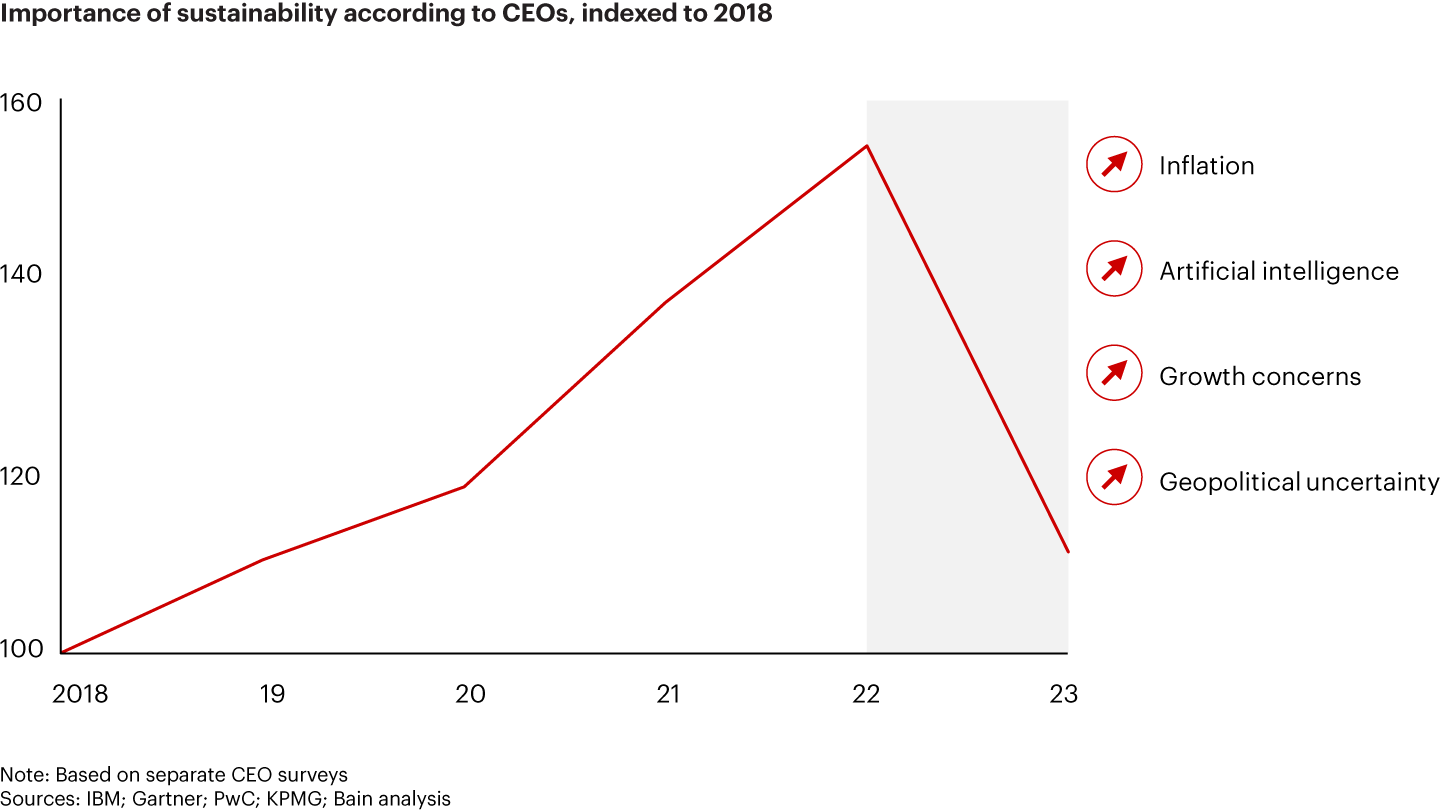
      CEOs’ prioritization of sustainability has declined sharply

      Sustainability still matters, but companies are struggling to meet their existing commitments. Of the companies disclosing their progress via CDP, 30% are well behind on their Scope 1 and 2 emissions reduction goals, and almost half are behind on Scope 3. Many companies are reassessing, adjusting, and, in some cases, retracting their climate commitments. Some are simply missing the mark. In March 2024, 29% of companies in the Science Based Targets initiative’s Business Ambition for 1.5C campaign were removed for noncompliance.

      This is unfolding against a backdrop of heightened regulatory demands, as policymakers increasingly require public companies to disclose material mitigation activities and sustainability targets. Noncompliance risks penalties and reputational harm—both to companies and to their leaders individually—pressuring executives to either double down or step back.

      A familiar cycle

      The transition to a more sustainable world is following a familiar cycle (see Figure 2). These cycles of transformation typically start with a trigger—a technological breakthrough, a sudden societal change, or a regulatory impulse.

      A “hype” phase of excitement, hope, and frenzied activity follows this trigger, with behavior often accelerated by generous policy incentives. When sky-high expectations are not quickly met, or governments pull back prematurely, sentiment falls into the “trough of disillusionment,” a realization that the transformation will not be as quick or as easy as expected. At this point, it’s common for stakeholders to rethink their approach.

      Many sustainability efforts are currently in this trough.

      Figure 2
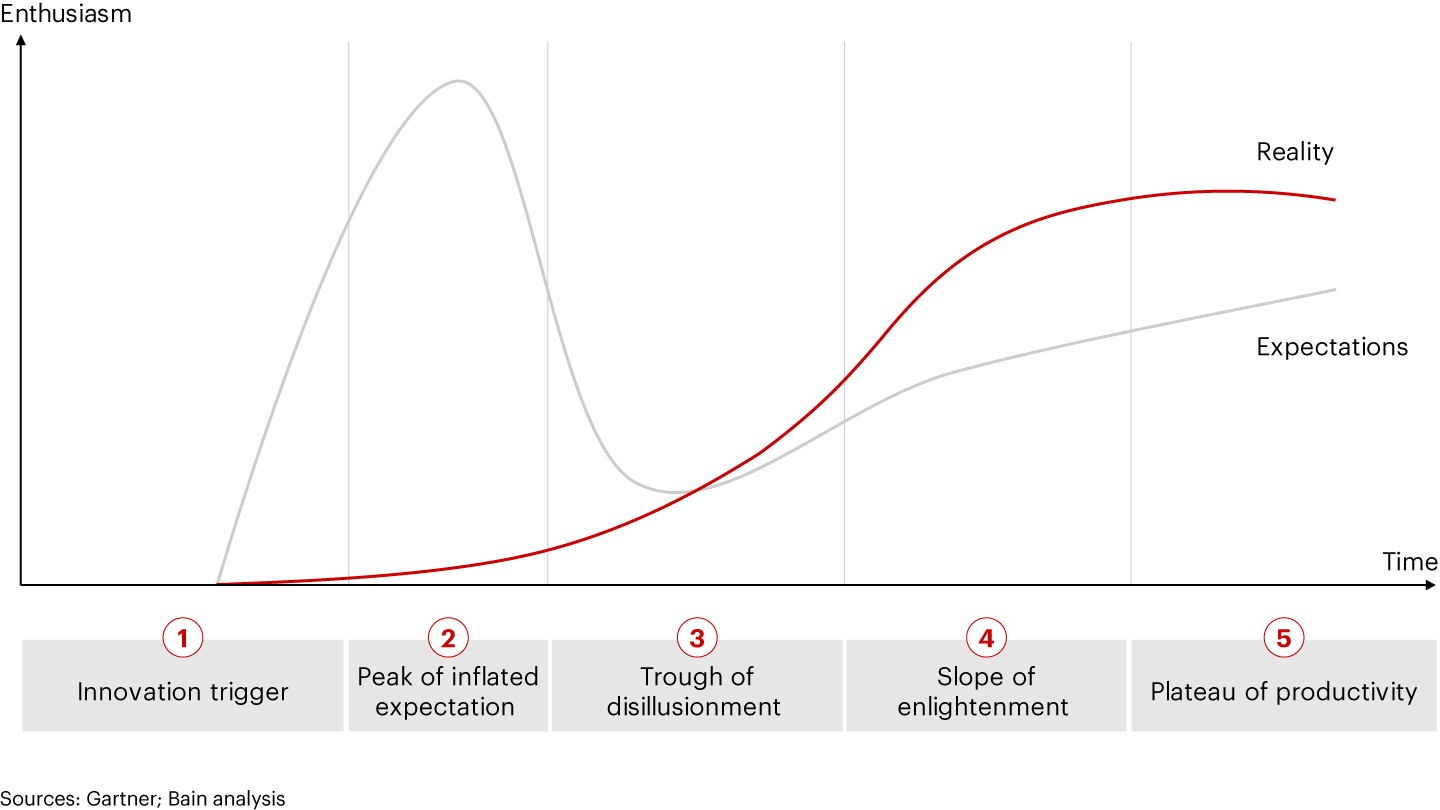
      An illustrative view of common transformation cycles

      The shape and pace of this curve are influenced by the interplay of three forces discussed in last year’s CEO guide to sustainability: technology, consumer/customer behavior, and policy. As technology advances, companies improve efficiency and lower costs. As costs decline, adoption by customers and consumers picks up, growth accelerates, and a tipping point is reached. Before that critical threshold, government policies such as subsidies and regulation can provide a bridge of support as companies build knowledge and experience.

      The history of the electric vehicle industry in Germany and Norway illustrates how policy can shape this trajectory. As EV manufacturers have moved along the technology experience curve over the last six years, battery costs have dropped by one-third and are projected to fall another 25% by 2030.

      Through its policies, Norway has steadily supported EVs and consumer adoption. As a result, sales there have continued to grow. In Germany, by contrast, direct subsidies for EV purchases were significantly reduced at the beginning of 2023 and cut altogether at the end of the year. EV sales promptly dropped and remain below 2023 levels. Germany’s government cut support too early, before the cost of technology could reach the point at which the market would be self-sustaining.

      This dynamic takes time to play out. CEOs should take a long-term view and not overreact to short-term trends. The trajectories of early sustainable technologies like solar are instructive (see Figure 3). Pushed by technological breakthroughs and government subsidies, Europe’s solar industry grew dramatically from 2000 to 2011. Then, as governments cut subsidies faster than the cost benefits from technological breakthroughs could be realized, the market cooled significantly. But by 2017, solar had reached its tipping point. Panel producers had enough experience and costs had declined to the point where mainstream consumers and energy companies were buying.

      Companies and CEOs that stayed the course put themselves in position to benefit from the now-clear business case for solar. Today, installations are booming across Europe and much of the world.

      Figure 3
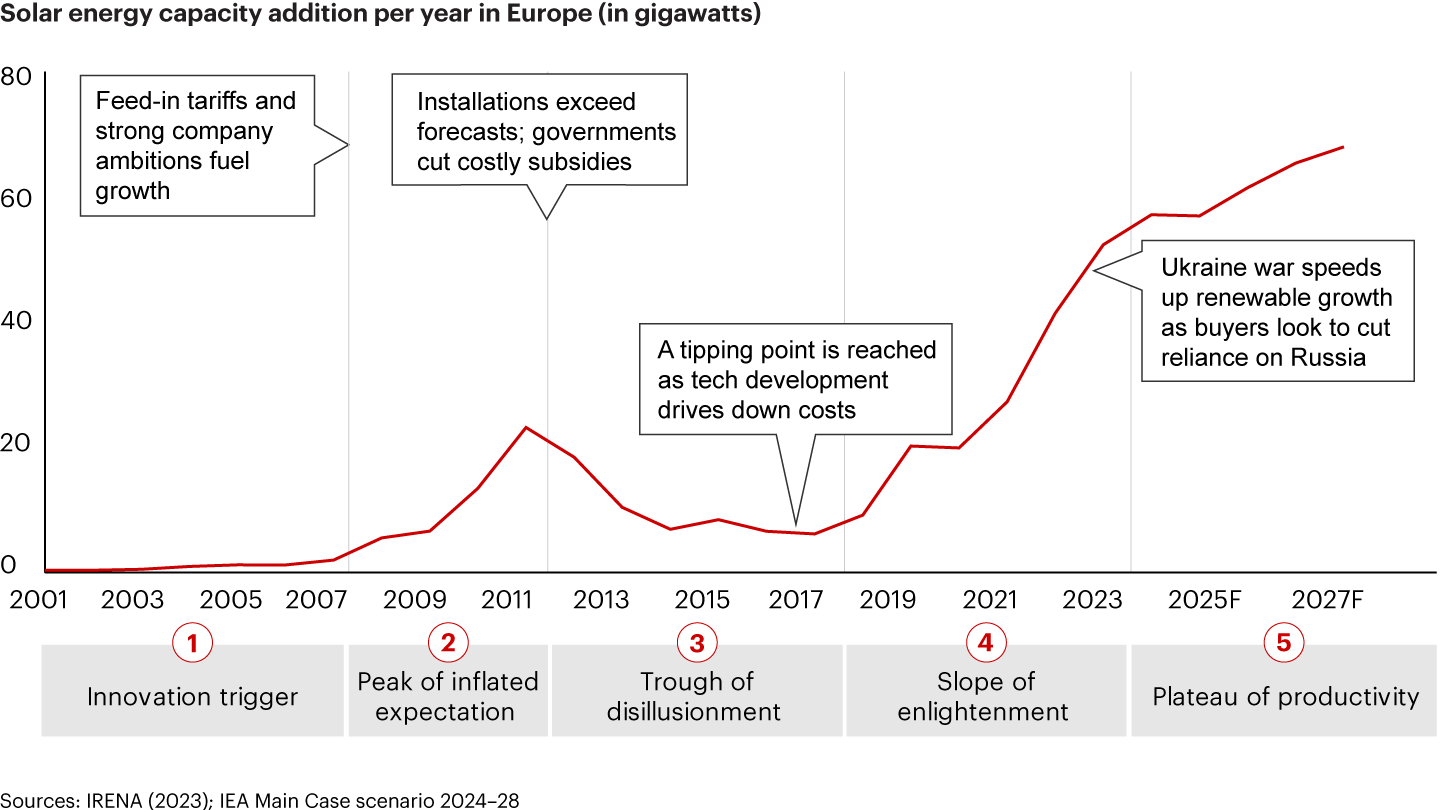
      Solar energy has followed a common transformation cycle

      As cost and adoption continue their dynamic interaction, many sustainable technologies are likely to reach their tipping point more quickly than expected. Forecasts for the development of solar and wind capacity, for example, have consistently underestimated market growth. Actual 2023 solar capacity was more than three times 2015 forecasts (see Figure 4). If this underforecasting continues, deployment may be even quicker than currently expected.

      Figure 4
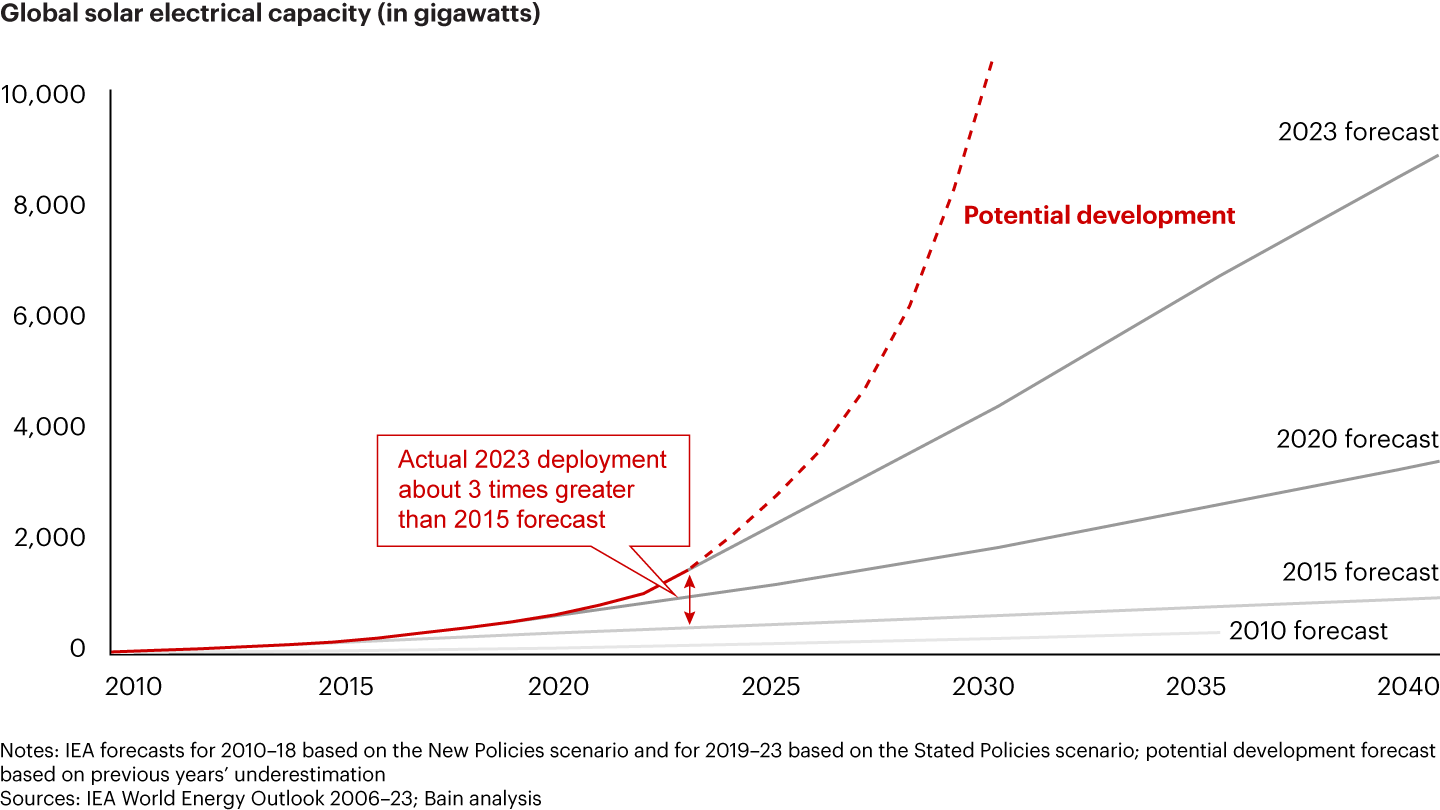
      Forecasts consistently underestimate the speed of renewables’ development

      As business leaders navigate these challenges, visionary pragmatism is needed more than ever. Based on conversations and work with hundreds of companies and executives, we have identified four key questions that will help leaders in any industry or location set their ambition and begin to chart the path ahead.

      1. How will global sustainability transitions shape the future business landscape?

      Dramatic shifts are underway in our energy supply, our global food system, the financing of sustainability, and materials supply and consumption. These transitions bring risks and opportunities that will play out over horizons far beyond the typical two- to three-year planning period. There will be new profit pools, supply chain disruptions, and scarcity. Political and technological developments, such as AI’s huge energy demand, will create disruption.

      To prepare, companies must first envision the future and develop scenarios and future-back strategies that ensure they are ready to make the right choices. This may include quickly securing a reliable supply of raw material, making foundational investments in sustainability, or evaluating the vulnerabilities of a fixed asset base.

      One example: In response to increasing regulation and decarbonization targets for high-carbon-emitting steel production, steel companies are building green steel production in phases. They are gradually replacing existing blast furnaces with hydrogen-based direct reduction and green-electricity-powered arc furnaces, thereby developing technological and sustainable selling expertise while protecting their license to operate as regulation accelerates.

      2. What are our critical priorities, and how fast must we move?

      Moving from ambitious commitments to practical delivery is hard. Focus on truly material topics—those that are critical for the business and where it is possible to make meaningful change—is essential. Some companies are rethinking and restating sustainability targets, and more are asking tough questions. It will be important to stay focused on sustainability and prepare to accelerate in order to gain competitive advantage as scenarios change.

      One example: a machinery company. One of the first to set ambitious environmental, social, and governance targets, the company realizes it is spread too thin and that some of its commitments are not directly tied to competitive advantage or business value. Others have had limited impact. The company refocuses on a smaller number of meaningful changes, setting ambitious Scope 1 and 2 and upstream Scope 3 decarbonization goals. The company also zeroes in on one additional area that matters most to it and its customers: circularity.

      3. How can we build a business case for sustainability?

      High costs and uncertain return on investment are the two impediments to developing sustainability programs most frequently mentioned by executives. To build a business case for sustainability, focus on multiple aspects: cost reduction from more efficient raw materials and energy consumption, commercial opportunities such as new customers, price premiums, and avoiding downside risks. Implementing changes with positive ROI first, companies can gain the momentum needed to tackle more complex ones.

      One example: In the chemical industry, companies will need to make substantial capital investments in decarbonization. To offset these costs, one company is exploring commercial opportunities in sustainable plastics such as low-carbon-intensity polyethylene. It has identified several suitable applications and end markets that could help it gain share, thereby building a clear business case for the investment.

      4. What actions should we take with external stakeholders?

      Sustainability issues are complex and systemic. Companies can’t go it alone. They must work up and down their supply chain to develop end-to-end solutions. Industry coalitions can help signal shared intent and foster precompetitive collaboration. Executives must work proactively to shape the policy landscape and build relationships in the public and nonprofit sectors.

      One example: a hypothetical textile company that faces shortages in recycled inputs such as rPET due to inefficient and inconsistent collection methods and competing demand from other industries. It looks to develop partnerships across the value chain with fiber and PET recyclers, collaborate precompetitively with other textile companies, and create partnerships with consumer products companies facing similar shortages. Such broad coalitions might help influence country-level recycling regulations and boost supply.

      Helping executives answer these four questions is the aim of this CEO guide. We offer new research on B2B customers and end consumers—what they want, how willing they are to pay for sustainability, and how to influence their behavior. We dive deeply into challenging transitions, including energy, AI, and food systems. And we speak to a CFO who is pioneering a new financial model for sustainability. We hope you find both inspiration and practical ideas to take to your teams and organizations.

      • Acknowledgments

        For their contributions to this report, the leadership team of Bain & Company’s Global Sustainability & Responsibility practice would like to thank the following people: Yelena Ageyeva-Furman, Derek Baraldi, Jeff Bauter Engel, Joel Benzimra, Hannah Bingley, Morgan Booher, Bob Brinckman, Anne-Elise Brouillard, Jan Budde, Nanette Byrnes, Julian Critchlow, Prashant Das, Jenny Davis-Peccoud, David Diamond, Juan Diego Gavidia, Amalie Dualeh, Katherine Duceman, Gail Edmondson, Robert Ferguson, Giulia Gallo, Nidhi Garg, Sheena Garg, Mael Gourlaouen, Christian Graf, Ellyn Gray, Chris Griffith, Johnny Hanson, Molly Hart, Annabell Hillenbrand, Lutchia Jakmakian, Matthieu Jonard, Paul Judge, Andrew Kahn, Juan Kaiser, Niels Koggersbol, Sune Kok, Emily Leinbach, Chloé Marchal, Lorenza Montedoro, Martha Moreau, Rupert Ottinger, Tracy Parker, Tanja Pick, Andrew Pontti, Abhijit Prabhu, Louis Roger, Aya Sakaguchi, Manya Sodhani, Tania Strauss, Holly Sullivan, Tiiram Sunderland, Himadri Suri, Joe Tan, Tarah Walker, Katie Ware, Melanie Zook, and the Editorial team.

      Read the Next Section

      The Sustainability Puzzle: What Do Consumers Really Want?

      Read our 2024 CEO Sustainability Guide

      EXPORE THE REPORT DOWNLOAD THE PDF

      More from the report

      • Four Questions for Every CEO

      • What Consumers Want

      • Selling Sustainability in B2B

      • Accelerating Decarbonization

      • AI and Sustainability

      • Voice of the CFO

      • Energy

      • Circularity

      • Food

      著者
      • Headshot of Jean-Charles van den Branden
        Jean-Charles van den Branden
        パートナー, Brussels
      • Headshot of François Faelli
        François Faelli
        パートナー, Brussels
      • Headshot of John Blasberg
        John Blasberg
        パートナー, Boston
      • Headshot of Karan Singh
        Karan Singh
        パートナー, New Delhi
      関連業種
      • エネルギー、天然資源
      • 金融サービス
      • 産業財、サービス
      • 小売
      • 消費財
      関連するコンサルティングサービス
      • Business Strategy
      • サステイナビリティ、社会貢献
      • フルポテンシャル・トランスフォメーション
      • 戦略
      コンサルティングサービス
      • Climate Change
      エネルギー、天然資源
      Why Leaders Must Focus on Carbon Removal Markets Now

      The business case for building the net-zero future.

      詳細
      CEO's Guide to Sustainability
      How CEOs Can Turn Decarbonization Setbacks into Progress

      Successful companies are establishing a strong business case and then collaborating across the value chain.

      詳細
      エネルギー、天然資源
      Embracing the “Do-Say” Gap

      Three pragmatic questions that shift sustainability from ambition to action.

      詳細
      Climate Change
      Financing Climate Solutions in Brazil

      A study conducted by Bain, in partnership with BNDES, highlights both the challenges and the opportunities to accelerate the climate transition.

      詳細
      エネルギー、天然資源
      The CEO Playbook for Climate Resilience

      Build to bend, not break, when managing climate adaptation.

      詳細
      First published in 9月 2024
      Tags
      • Business Strategy
      • CEO's Guide to Sustainability
      • CEOアジェンダ
      • Climate Change
      • エネルギー、天然資源
      • サステイナビリティ、社会貢献
      • フルポテンシャル・トランスフォメーション
      • 金融サービス
      • 産業財、サービス
      • 小売
      • 消費財
      • 戦略

      クライアント支援事例

      Customer Experience With Sophisticated Customer Segmentation, a Travel Company Sets Sail

      ケーススタディを見る

      サステイナビリティ、社会貢献 A Manufacturer Vows to “Push to Zero” Carbon Emissions

      ケーススタディを見る

      戦略 Focus on core delivers growth for retailer

      ケーススタディを見る

      お気軽にご連絡下さい

      私達は、グローバルに活躍する経営者が抱える最重要経営課題に対して、厳しい競争環境の中でも成長し続け、「結果」を出すために支援しています。

      ベインの知見。競争が激化するグローバルビジネス環境で、日々直面するであろう問題について論じている知見を毎月お届けします。

      *プライバシーポリシーの内容を確認し、合意しました。

      プライバシーポリシーをご確認頂き、合意頂けますようお願い致します。
      Bain & Company
      お問い合わせ Sustainability Accessibility Terms of use Privacy Cookie Policy Sitemap Log In

      © 1996-2026 Bain & Company, Inc.

      お問い合わせ

      How can we help you?

      • ビジネスについて
      • プレス報道について
      • 採用について
      全てのオフィス