
Skip to Content
  • オフィス

    オフィス

    北米・南米
    • Atlanta
    • Austin
    • Bogota
    • Boston
    • Buenos Aires
    • Chicago
    • Dallas
    • Denver
    • Houston
    • Los Angeles
    • Mexico City
    • Minneapolis
    • Monterrey
    • Montreal
    • New York
    • Rio de Janeiro
    • San Francisco
    • Santiago
    • São Paulo
    • Seattle
    • Silicon Valley
    • Toronto
    • Washington, DC
    ヨーロッパ・中東・アフリカ
    • Amsterdam
    • Athens
    • Berlin
    • Brussels
    • Copenhagen
    • Doha
    • Dubai
    • Dusseldorf
    • Frankfurt
    • Helsinki
    • Istanbul
    • Johannesburg
    • Kyiv
    • Lisbon
    • London
    • Madrid
    • Milan
    • Munich
    • Oslo
    • Paris
    • Riyadh
    • Rome
    • Stockholm
    • Vienna
    • Warsaw
    • Zurich
    アジア・オーストラリア
    • Bangkok
    • Beijing
    • Bengaluru
    • Brisbane
    • Ho Chi Minh City
    • Hong Kong
    • Jakarta
    • Kuala Lumpur
    • Manila
    • Melbourne
    • Mumbai
    • New Delhi
    • Perth
    • Shanghai
    • Singapore
    • Sydney
    • Tokyo
    全てのオフィス
  • アルムナイ
  • メディア
  • お問い合わせ
  • 東京オフィス
  • Japan | 日本語

    地域と言語を選択

    グローバル
    • Global (English)
    北米・南米
    • Brazil (Português)
    • Argentina (Español)
    • Canada (Français)
    • Chile (Español)
    • Colombia (Español)
    ヨーロッパ・中東・アフリカ
    • France (Français)
    • DACH Region (Deutsch)
    • Italy (Italiano)
    • Spain (Español)
    • Greece (Elliniká)
    アジア・オーストラリア
    • China (中文版)
    • Korea (한국어)
    • Japan (日本語)
  • Saved items (0)
    Saved items (0)

    You have no saved items.

    後で閲読、共有できるようにするためにブックマークしてください

    Explore Bain Insights
  • 業界別プラクティス
    メインメニュー

    業界別プラクティス

    • 航空宇宙、防衛、政府関連
    • 農業
    • 化学製品
    • インフラ、建設
    • 消費財
    • 金融サービス
    • ヘルスケア
    • 産業機械、設備
    • メディア、エンターテインメント
    • 金属
    • 採掘・鉱業
    • 石油、ガス
    • 紙、パッケージ
    • プライベートエクイティ
    • 公共、社会セクター
    • 小売
    • テクノロジー
    • 通信
    • 交通
    • 観光産業
    • 公益事業、再生可能エネルギー
  • 機能別プラクティス
    メインメニュー

    機能別プラクティス

    • カスタマー・エクスペリエンス
    • サステイナビリティ、 社会貢献
    • Innovation
    • 企業買収、合併 (M&A)
    • オペレーション
    • 組織
    • プライベートエクイティ
    • マーケティング・営業
    • 戦略
    • アドバンスド・アナリティクス
    • Technology
    • フルポテンシャル・トランスフォーメーション
  • Digital
  • 知見/レポート
  • ベイン・アンド・カンパニーについて
    メインメニュー

    ベイン・アンド・カンパニーについて

    • ベインの信条
    • 活動内容
    • 社員とリーダーシップ
    • プレス・メディア情報
    • クライアントの結果
    • 受賞歴
    • パートナーシップを結んでいる団体
    Further: Our global responsibility
    • ダイバーシティ
    • 社会貢献
    • サステイナビリティへの取り組み
    • 世界経済フォーラム(WEF)
    Learn more about Further
  • キャリア
    メインメニュー

    キャリア

    • ベインで働く
      キャリア
      ベインで働く
      • Find Your Place
      • ベインで活躍する機会
      • ベインのチーム体制
      • 学生向けページ
      • インターンシップ
      • 採用イベント
    • ベインでの体験
      キャリア
      ベインでの体験
      • Blog: Inside Bain
      • キャリアストーリー
      • 社員紹介
      • Where We Work
      • 成長を後押しするサポート体制
      • アフィニティ・グループ
      • 福利厚生
    • Impact Stories
    • 採用情報
      キャリア
      採用情報
      • 採用プロセス
      • 面接内容
    FIND JOBS
  • オフィス
    メインメニュー

    オフィス

    • 北米・南米
      オフィス
      北米・南米
      • Atlanta
      • Austin
      • Bogota
      • Boston
      • Buenos Aires
      • Chicago
      • Dallas
      • Denver
      • Houston
      • Los Angeles
      • Mexico City
      • Minneapolis
      • Monterrey
      • Montreal
      • New York
      • Rio de Janeiro
      • San Francisco
      • Santiago
      • São Paulo
      • Seattle
      • Silicon Valley
      • Toronto
      • Washington, DC
    • ヨーロッパ・中東・アフリカ
      オフィス
      ヨーロッパ・中東・アフリカ
      • Amsterdam
      • Athens
      • Berlin
      • Brussels
      • Copenhagen
      • Doha
      • Dubai
      • Dusseldorf
      • Frankfurt
      • Helsinki
      • Istanbul
      • Johannesburg
      • Kyiv
      • Lisbon
      • London
      • Madrid
      • Milan
      • Munich
      • Oslo
      • Paris
      • Riyadh
      • Rome
      • Stockholm
      • Vienna
      • Warsaw
      • Zurich
    • アジア・オーストラリア
      オフィス
      アジア・オーストラリア
      • Bangkok
      • Beijing
      • Bengaluru
      • Brisbane
      • Ho Chi Minh City
      • Hong Kong
      • Jakarta
      • Kuala Lumpur
      • Manila
      • Melbourne
      • Mumbai
      • New Delhi
      • Perth
      • Shanghai
      • Singapore
      • Sydney
      • Tokyo
    全てのオフィス
  • アルムナイ
  • メディア
  • お問い合わせ
  • 東京オフィス
  • Japan | 日本語
    メインメニュー

    地域と言語を選択

    • グローバル
      地域と言語を選択
      グローバル
      • Global (English)
    • 北米・南米
      地域と言語を選択
      北米・南米
      • Brazil (Português)
      • Argentina (Español)
      • Canada (Français)
      • Chile (Español)
      • Colombia (Español)
    • ヨーロッパ・中東・アフリカ
      地域と言語を選択
      ヨーロッパ・中東・アフリカ
      • France (Français)
      • DACH Region (Deutsch)
      • Italy (Italiano)
      • Spain (Español)
      • Greece (Elliniká)
    • アジア・オーストラリア
      地域と言語を選択
      アジア・オーストラリア
      • China (中文版)
      • Korea (한국어)
      • Japan (日本語)
  • Saved items  (0)
    メインメニュー
    Saved items (0)

    You have no saved items.

    後で閲読、共有できるようにするためにブックマークしてください

    Explore Bain Insights
  • 業界別プラクティス
    • 業界別プラクティス

      • 航空宇宙、防衛、政府関連
      • 農業
      • 化学製品
      • インフラ、建設
      • 消費財
      • 金融サービス
      • ヘルスケア
      • 産業機械、設備
      • メディア、エンターテインメント
      • 金属
      • 採掘・鉱業
      • 石油、ガス
      • 紙、パッケージ
      • プライベートエクイティ
      • 公共、社会セクター
      • 小売
      • テクノロジー
      • 通信
      • 交通
      • 観光産業
      • 公益事業、再生可能エネルギー
  • 機能別プラクティス
    • 機能別プラクティス

      • カスタマー・エクスペリエンス
      • サステイナビリティ、 社会貢献
      • Innovation
      • 企業買収、合併 (M&A)
      • オペレーション
      • 組織
      • プライベートエクイティ
      • マーケティング・営業
      • 戦略
      • アドバンスド・アナリティクス
      • Technology
      • フルポテンシャル・トランスフォーメーション
  • Digital
  • 知見/レポート
  • ベイン・アンド・カンパニーについて
    • ベイン・アンド・カンパニーについて

      • ベインの信条
      • 活動内容
      • 社員とリーダーシップ
      • プレス・メディア情報
      • クライアントの結果
      • 受賞歴
      • パートナーシップを結んでいる団体
      Further: Our global responsibility
      • ダイバーシティ
      • 社会貢献
      • サステイナビリティへの取り組み
      • 世界経済フォーラム(WEF)
      Learn more about Further
  • キャリア
    人気検索キーワード
    • デジタル
    • 戦略
    前回の検索
      最近訪れたページ

      Content added to saved items

      Saved items (0)

      Removed from saved items

      Saved items (0)

      レポート

      Healthcare Private Equity in North America: Bring On the Gem Assets

      Healthcare Private Equity in North America: Bring On the Gem Assets

      After a mild decline in deals, activity has started to bounce back on the strength of favorable underlying trends.

      著者:Jeremy Martin, Nirad Jain, Kara Murphy, Jon Barfield, Eric Berger, Benjamin Cooke, Justin Doshi, Sharon Fry, Kalyan Jonnalagadda, Laila Kassis, Jason Slocum, Matt Sullivan, and Jon Webber

      • min read
      }

      レポート

      Healthcare Private Equity in North America: Bring On the Gem Assets
      en
      概要
      • North America posted strong healthcare private equity activity despite the challenges of the pandemic and lockdowns. Buyout volume declined only slightly to 142 deals in 2020, compared with the record-setting 159 in 2019. Disclosed deal value also dropped to $34.7 billion, down 25% from the $47 billion in 2019.
      • Several factors account for the declines. The healthcare provider sector lacked megadeals, special purpose acquisition companies (SPACs) took some large deals that might otherwise have gone to PE sponsors, and Covid-19 prompted the deferral of some planned deals.
      • Healthcare providers remained the most active sector, with 74 deals in 2020 compared with 96 in 2019. Provider deals as a share of total deals in the region dipped to 52% in 2020, down from 60% in 2019.

      This article is part of Bain's 2021 Global Healthcare Private Equity and M&A Report.

      Explore the report
      • Regional overview

        North America: For the first time, North America was passed by the Asia-Pacific region as the leader for healthcare private equity in deal count, though it retained the leadership position in disclosed value. Volume dropped slightly to 142 deals, down from 159 in 2019. Disclosed deal values also dropped to $34.7 billion, compared with $46.7 billion in 2019.

        Average deal value (for deals that disclosed value) dropped from $1.0 billion in 2019 to $0.5 billion in 2020. This difference largely stemmed from the absence of megadeals compared with prior years, as the Covid-19 pandemic caused parties to defer some large transactions, and special purpose acquisition companies gained favor as an exit alternative for some large deals. Volatility in the marketplace also likely encouraged pursuit of smaller, incremental deals, especially if they could be added on to existing portfolio assets.

        Europe: European deal volume dropped slightly to 75 deals from a high of 80 in 2019. Disclosed value fell by nearly 30% to $14.0 billion after reaching $19.7 billion in 2019. Part of this drop stems from the lack of megadeals that were present in 2019, notably the $10.1 billion Nestlé Skin Health acquisition, as well as some known high-value deals going undisclosed. Overall, activity and values for 2020 demonstrated clear signs of a robust underlying acquisition market despite Covid-19’s effects on buyout processes.

        Asia-Pacific: Deal volume increased significantly to 156, up from 68 in 2019 and 88 in 2018. However, the rise in disclosed value was less pronounced, $16.9 billion up from $11.5 billion the year prior. The 2020 gains mirrored the region’s long-term growth and derived largely from greater domestic investing, especially in China and India biopharmaceuticals and services as smaller, venture deals of the past are beginning to evolve into growth equity opportunities for investors. Additionally, several structural reasons (such as government policy shifts supporting the growth of local healthcare champions) and strategic reasons (such as lack of supply in domestic assets) led sponsors to continue with smaller, consortium investments in early-stage targets. There were only two deals valued over $1 billion, down slightly from four in 2019.

        Rest of the world: As in past years, healthcare private equity activity was scant in the rest of the world. Activity reached just seven deals, up from six in 2019, primarily in the Middle East and Africa.

      Like most other industries in North America, healthcare experienced profound shocks from the Covid-19 pandemic, which dampened private equity dealmaking (see Figure 1). Yet deal activity has started to bounce back faster than some other industries as healthcare increased its share of overall private equity deals, largely on the strength of continued, favorable underlying trends: An aging population and the rising incidence of chronic disease expands the need for healthcare.

      Figure 1
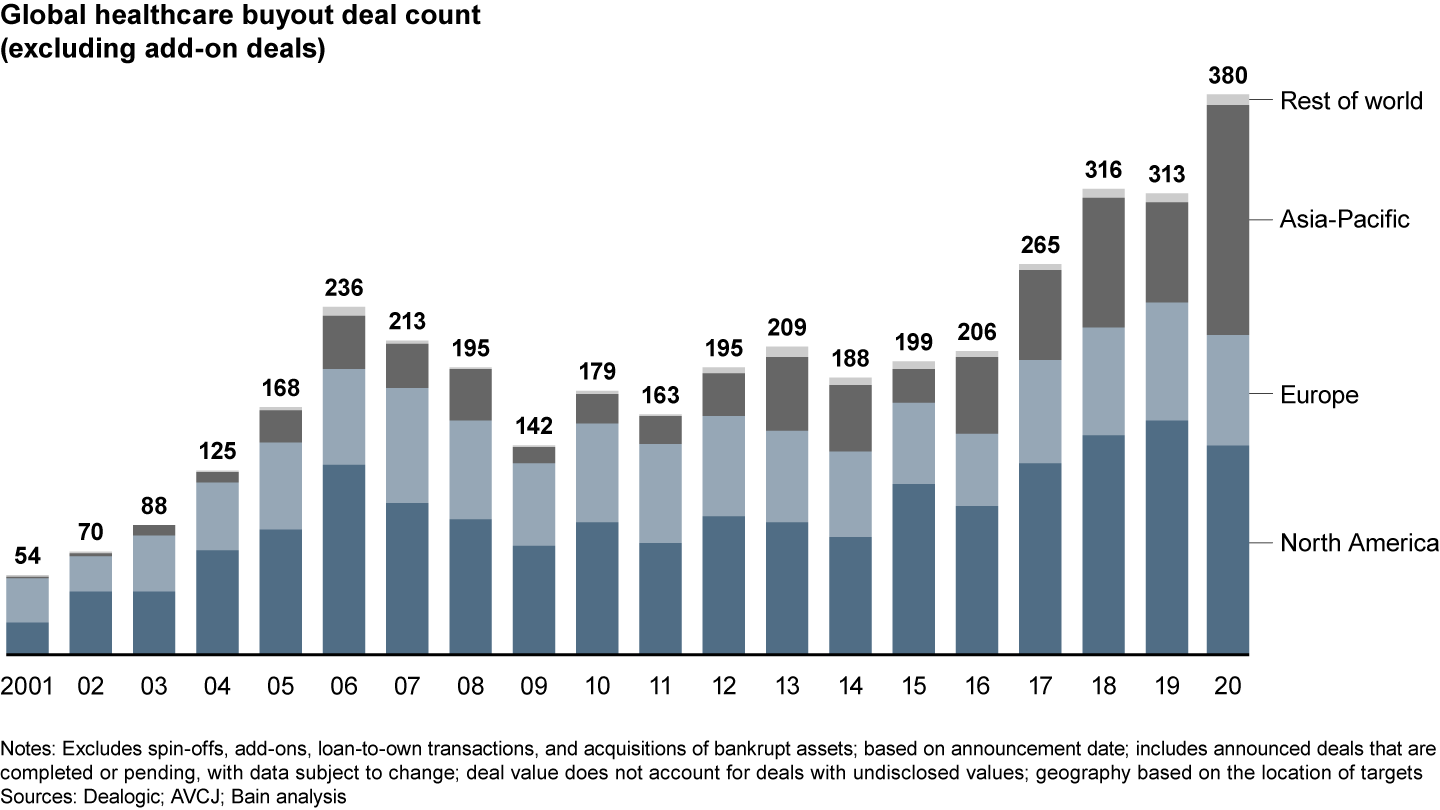
      Deal activity surged in Asia-Pacific, offsetting a decline in North America and Europe

      Due to their confidence in healthcare tailwinds, private equity investors with a strong history in healthcare doubled down on the sector in 2020 in pursuit of compelling targets. For instance, Blackstone completed several acquisitions and investments to strengthen its portfolio, including HealthEdge, Cryoport, and Precision Medicine Group, as well as ZO Skin Health, a cosmetics company with potential healthcare applications. Additionally, many funds took opportunities to strengthen their existing portfolio company capabilities with add-on assets. Advent, for example, augmented the home health services of its AccentCare asset with the acquisition of and merger with Seasons Hospice.

      Meet the members of Bain’s Healthcare Private Equity practice.

      Our team

      Healthcare providers: Focused deal activity in the face of broader volume challenges

      In keeping with the past few years, the provider sector accounted for the most deals, with 74 in 2020, down from 96 in 2019 (see Figure 2). This was largely true across other regions as well, where, combined with biopharma activity, there was a heavy concentration of overall deal activity. In addition to deals in the provider sector, sponsors had to help portfolio assets navigate the challenges brought on by the Covid-19 storm, including sudden demand for telemedicine, the need to make labor cost structures more variable, and operational constraints such as shortages of personal protective equipment.

      Figure 2
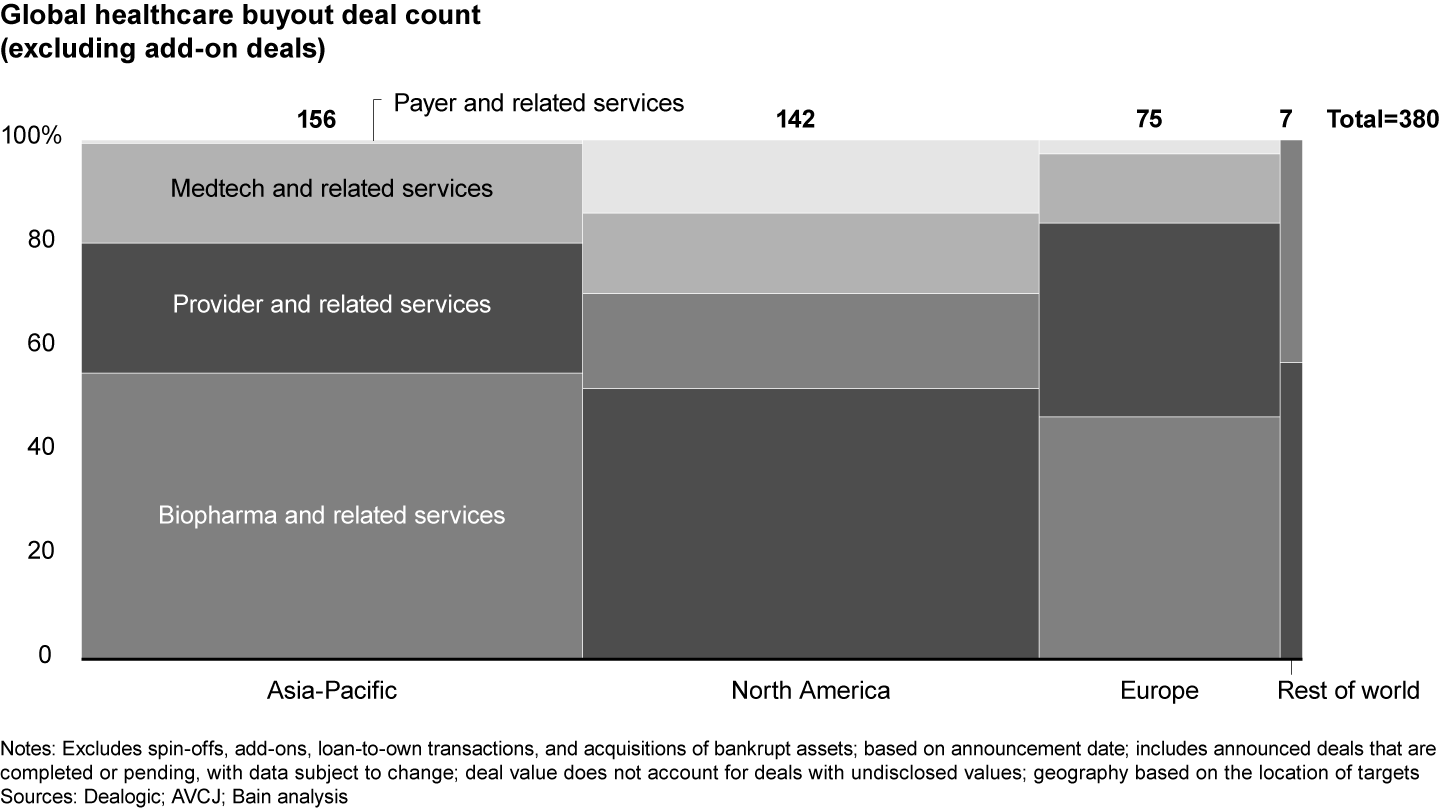
      The biopharma and provider sectors accounted for the largest share of deals in all regions
      The biopharma and provider sectors accounted for the largest share of deals in all regions
      The biopharma and provider sectors accounted for the largest share of deals in all regions

      Certain provider segments, including behavioral health, women’s health, veterinary medicine, and home care gained additional momentum in 2020. Behavioral health specifically has enjoyed increasing recognition as an important part of integrated care plans, and increases both in the use of behavioral health services by patients and in funding by commercial and public healthcare payers due to the Mental Health Parity Act have driven growth. Given the segment’s growth, supply constraints, and the high fragmentation of behavioral health providers, sponsors have identified this space as fertile ground for early buy-and-build opportunities. TPG invested in behavioral therapy firm LifeStance Health in partnership with Summit Partners and Silversmith, with the goal of fueling geographic and digital growth for the firm. Kelso invested to capture segment growth through its majority stake acquisition of Refresh Mental Health, a national provider of outpatient mental health services.

      Medicare Advantage volume continued to spur high-single-digit growth, generating interest from investors accustomed to slower growth from other traditional buy-and-build segments. Well-run providers have been able to profitably manage seniors through the full continuum of care, using at-risk capitated models, and then improve returns further by expanding the range of services they deliver. For instance, TPG is partnering with Kelsey-Seybold Clinic with the intent of accelerating the growth of its accountable care model. And Cano Health is investing to grow its model by going public through the Jaws Acquisition special purpose acquisition company (SPAC). General Atlantic-backed Oak Street Health’s IPO and the Welsh, Carson, Anderson & Stowe joint venture with Humana also exemplify this trend of activity among risk-bearing providers.

      Home and hospice healthcare investment also continued its upward trajectory as provider care shifts to these channels. To that end, Thomas H. Lee returned to hospice investing, after its successful 2018 exit of Curo, with its acquisition of Care Hospice. As another example, St. Croix Hospice, a US provider of hospice care, was purchased by H.I.G. Capital.

      In all segments, tech-savvy providers found that the digital components of their business improved operations and sparked interest among investors. KKR acquired 1-800-CONTACTS for $3 billion to target the longer-term opportunities outside of its core investments strategy, given the growing adoption of e-commerce and telemedicine amid the pandemic.

      Biopharma: Strong services assets drove activity

      Biopharma’s share of North American deal activity in 2020 was fairly stable compared with 2019, with 18% of volume compared with 19% in 2019. Its share of deal value, however, declined to 23% in 2020 from 37% in 2019.

      Biopharma services continued to generate the strongest interest from experienced private equity sponsors looking at this sector. The traditional hunting grounds in services, such as contract research organizations (CROs), contract development and manufacturing organizations (CDMOs), and outsourced commercialization services (such as market access, reimbursement, and data and analytics), continued to attract strong investor interest. In general, North American funds appeared more enthusiastic about biopharma services opportunities than about taking on molecule-specific risk.

      For instance, Kohlberg and Mubadala acquired a majority stake in PCI Pharma Services, an integrated pharmaceutical supply chain solutions company. Blackstone also invested in biopharma services and took advantage of unique cell and gene therapy logistics through the investment in Cryoport, a provider of storage products maintaining cryogenic temperatures.

      Medtech: Tumbling elective procedures created uncertainty for sponsors

      Deal count dipped in 2020 for North American medtech, but disclosed value saw a modest increase. Funds did 22 deals compared with 24 in 2019, and value jumped to $3 billion, from $2.4 billion in 2019. The sector accounted for 15% of deals in the region but only 9% of the disclosed value.

      Uncertainty around the timing of a rebound in elective procedures served as a drag on deal volume. Almost half of the sector’s value came from just two deals, but no deal exceeded $1 billion.

      Investors continued to take advantage of opportunities to carve out business units. American Securities acquired the Life Science division of NN, a global industrial manufacturer, for $0.8 billion in order to combine that company with MW Industries and expand the medical portfolio. Montagu Private Equity acquired RTI’s original equipment manufacturer business from RTI Surgical for $0.4 billion. These carve-outs were likely attractive to investors as opportunities to strengthen category leadership, such as American Securities’ MW Industries’ leadership in the medical springs market.

      Investors also have been looking for medtech firms that can ride the rising tide of consumerism in healthcare. One of the areas that has seen recent growth in consumer demand is veterinary medicine, where Fidelio Capital acquired two firms focused on veterinary orthopedic solutions, BioMedtrix and Veterinary Orthopedic Implants.

      Healthcare payers: Smaller transactions in services dominate

      Payer activity during the year jumped compared with the recent past, with 20 deals closed, compared with 8 in 2019. Value also saw an increase in 2020 to $4.4 billion, up from $3.5 billion in 2019. The most significant payer deal is notable by its absence, as Multiplan traded to a SPAC for $9.7 billion, rather than to another financial sponsor.

      Of the scale transactions that occurred, activity tended to focus on payer-facing services, such as TA Associates’ and Francisco’s growth investment in Edifecs, an interoperability technology that optimizes the exchange and processing of administrative and clinical data to assure compliance and increase revenue. Investment in payer technology that helps manage cost for employers or improve the consumer experience also was prevalent. For example, Onex invested $960 million for a majority stake in OneDigital, which provides an online platform for employer advisory services focused on healthcare, wellness, and workplace benefits.

      Healthcare IT: Many paths to investment success

      After rapidly growing for a number of years, healthcare IT experienced a slight drop in 2020, with 38 deals, down from 42 in 2019. Disclosed value also declined to $13.3 billion from $17.1 billion in 2019. However, investors continued to explore the healthcare IT sector on several fronts.

      One popular avenue centers on combined payer-employer services technologies that facilitate care and patient management at lower cost. Warburg Pincus and Great Hill Partners invested in Quantum Health, a consumer healthcare navigation and care coordination technology platform that will likely benefit from the trend to payer-employer service technology.

      Many investors also see great promise in the modernization of traditional clinical trial development through more efficient trial operation, increased virtualization, and improved solutions leveraging real world data. Carlyle Group acquired a majority stake in TriNetX and hopes to leverage its real-world data platform to refine clinical trial design and patient recruitment.

      We also expect continued pressure to modernize healthcare payments in order to streamline transactions between healthcare stakeholders. EQT, CPPIB, and Bain Capital-backed Waystar’s $1.3 billion acquisition of Medicare-focused eSolutions exemplifies this reasoning, as the deal helped to generate a new ecosystem for a broad set of providers to manage payments from both public and commercial payers.

      Covid-resilient businesses will make the earliest targets

      The fundamental characteristics that make it attractive for private equity funds with ample dry powder will endure. Despite the crisis caused by Covid-19, we expect healthcare’s rebound to be stronger than many other industries, and providers to continue as a high-performing sector. Among the standout areas for the coming year, we expect growth or acceleration of a number of trends that have piqued investor interest:

      • Risk-bearing providers of next-generation primary healthcare will likely thrive.
      • Biopharma services should draw significant interest given their exposure to a high-growth market without the inherent molecule risk.
      • Life science tools and diagnostics medtech have also received greater interest following greater demand during the pandemic.
      • Payer services that improve patient experience and reduce employer costs will likely garner investor attention.
      • Healthcare IT that can demonstrate a strong ROI to users, or facilitate new modes of care delivery, also will maintain momentum.

      In every sector, deal activity will focus, at least initially, on Covid-resilient businesses and those that can recover to their baseline performance fastest.

      More from the report

      • Welcome Letter: Fertile Conditions for Healthcare Private Equity Investment

      • Healthcare Private Equity Market 2020: The Year in Review

      • The Covid-19 Paradox: Widespread Repercussions for Demand, but New Healthcare Investment Opportunities as Well

      • Healthcare Private Equity in North America: Bring On the Gem Assets

      • Healthcare Private Equity in Europe: Steady Dealmaking despite Many Deferrals

      • Healthcare Private Equity in Asia-Pacific: Riding a Wave of Domestic Innovation

      • Healthcare Providers: New Roll-Up Candidates and a New Look for Risk-Bearing Providers

      • Healthcare Payers: A Bid to Reduce Costs for Patients and Employers

      • Biopharma: Commercialization Support Services Are Thriving

      • Medtech: Four Themes Fueled Deals despite the Pandemic

      • Healthcare IT: Technologies Help Improve Patient Experiences at Lower Costs

      • Healthcare M&A: A Pandemic-Induced Slowdown in Every Sector

      • Healthcare Exit Activity: Robust Capital Markets Spur a Surge of IPOs

      • Healthcare Private Equity Outlook: 2021 and Beyond

      Read our 2021 Global Healthcare Private Equity and M&A Report

      Explore the full report Download the PDF
      著者
      • Headshot of Jeremy Martin
        Jeremy Martin
        パートナー, Atlanta
      • Headshot of Nirad Jain
        Nirad Jain
        パートナー, New York
      • Headshot of Kara Murphy
        Kara Murphy
        パートナー, Boston
      • Headshot of Jon Barfield
        Jon Barfield
        パートナー, New York
      • Headshot of Eric Berger
        Eric Berger
        Alumni, Boston
      • Headshot of Benjamin Cooke
        Benjamin Cooke
        パートナー, San Francisco
      • Headshot of Justin Doshi
        Justin Doshi
        パートナー, Atlanta
      • Headshot of Sharon Fry
        Sharon Fry
        パートナー, New York
      • Headshot of Kalyan Jonnalagadda
        Kalyan Jonnalagadda
        パートナー, New York
      • Headshot of Laila Kassis
        Laila Kassis
        パートナー, Boston
      • Headshot of Jason Slocum
        Jason Slocum
        Alumni, Boston
      • Headshot of Matt Sullivan
        Matt Sullivan
        パートナー, San Francisco
      • Headshot of Jon Webber
        Jon Webber
        パートナー, Atlanta
      関連業種
      • プライベートエクイティ
      • ヘルスケア
      ヘルスケア
      Healthcare Private Equity in Europe: Steady Dealmaking despite Many Deferrals

      Investors seek out platforms in retail health and specialty pharma companies.

      詳細
      ヘルスケア
      Healthcare Private Equity in Asia-Pacific: Riding a Wave of Domestic Innovation

      Investors see underserved demand and favorable shifts in healthcare policies.

      詳細
      ヘルスケア
      Healthcare Private Equity Market 2020: The Year in Review

      Despite new uncertainties, the healthcare profit pool showed remarkable resilience.

      詳細
      Global Healthcare Private Equity Report
      What Differentiates Winning Healthcare IT Investments

      Amidst continued high-valuation multiples and competitive deal processes, a disciplined focus on value-creation levers distinguishes winning bids and successful exits.

      詳細
      Global Healthcare Private Equity Report
      Healthcare Private Equity Market 2025: Resurgence and Record Growth

      Healthcare private equity investment posted a very strong year for deal value and volume, paired with a strong rebound in exits.

      詳細
      First published in 3月 2021
      Tags
      • Global Healthcare Private Equity Report
      • プライベートエクイティ
      • ヘルスケア

      クライアント支援事例

      戦略 Review focuses biotech on portfolio potential

      ケーススタディを見る

      戦略 Pharma oncology growth strategy

      ケーススタディを見る

      業績改善 Turning bottlenecks into growth opportunities

      ケーススタディを見る

      お気軽にご連絡下さい

      私達は、グローバルに活躍する経営者が抱える最重要経営課題に対して、厳しい競争環境の中でも成長し続け、「結果」を出すために支援しています。

      ベインの知見。競争が激化するグローバルビジネス環境で、日々直面するであろう問題について論じている知見を毎月お届けします。

      *プライバシーポリシーの内容を確認し、合意しました。

      プライバシーポリシーをご確認頂き、合意頂けますようお願い致します。
      Bain & Company
      お問い合わせ Sustainability Accessibility Terms of use Privacy Cookie Policy Sitemap Log In

      © 1996-2026 Bain & Company, Inc.

      お問い合わせ

      How can we help you?

      • ビジネスについて
      • プレス報道について
      • 採用について
      全てのオフィス