
Skip to Content
  • オフィス

    オフィス

    北米・南米
    • Atlanta
    • Austin
    • Bogota
    • Boston
    • Buenos Aires
    • Chicago
    • Dallas
    • Denver
    • Houston
    • Los Angeles
    • Mexico City
    • Minneapolis
    • Monterrey
    • Montreal
    • New York
    • Rio de Janeiro
    • San Francisco
    • Santiago
    • São Paulo
    • Seattle
    • Silicon Valley
    • Toronto
    • Washington, DC
    ヨーロッパ・中東・アフリカ
    • Amsterdam
    • Athens
    • Berlin
    • Brussels
    • Copenhagen
    • Doha
    • Dubai
    • Dusseldorf
    • Frankfurt
    • Helsinki
    • Istanbul
    • Johannesburg
    • Kyiv
    • Lisbon
    • London
    • Madrid
    • Milan
    • Munich
    • Oslo
    • Paris
    • Riyadh
    • Rome
    • Stockholm
    • Vienna
    • Warsaw
    • Zurich
    アジア・オーストラリア
    • Bangkok
    • Beijing
    • Bengaluru
    • Brisbane
    • Ho Chi Minh City
    • Hong Kong
    • Jakarta
    • Kuala Lumpur
    • Manila
    • Melbourne
    • Mumbai
    • New Delhi
    • Perth
    • Shanghai
    • Singapore
    • Sydney
    • Tokyo
    全てのオフィス
  • アルムナイ
  • メディア
  • お問い合わせ
  • 東京オフィス
  • Japan | 日本語

    地域と言語を選択

    グローバル
    • Global (English)
    北米・南米
    • Brazil (Português)
    • Argentina (Español)
    • Canada (Français)
    • Chile (Español)
    • Colombia (Español)
    ヨーロッパ・中東・アフリカ
    • France (Français)
    • DACH Region (Deutsch)
    • Italy (Italiano)
    • Spain (Español)
    • Greece (Elliniká)
    アジア・オーストラリア
    • China (中文版)
    • Korea (한국어)
    • Japan (日本語)
  • Saved items (0)
    Saved items (0)

    You have no saved items.

    後で閲読、共有できるようにするためにブックマークしてください

    Explore Bain Insights
  • 業界別プラクティス
    メインメニュー

    業界別プラクティス

    • 航空宇宙、防衛、政府関連
    • 農業
    • 化学製品
    • インフラ、建設
    • 消費財
    • 金融サービス
    • ヘルスケア
    • 産業機械、設備
    • メディア、エンターテインメント
    • 金属
    • 採掘・鉱業
    • 石油、ガス
    • 紙、パッケージ
    • プライベートエクイティ
    • 公共、社会セクター
    • 小売
    • テクノロジー
    • 通信
    • 交通
    • 観光産業
    • 公益事業、再生可能エネルギー
  • 機能別プラクティス
    メインメニュー

    機能別プラクティス

    • カスタマー・エクスペリエンス
    • サステイナビリティ、 社会貢献
    • Innovation
    • 企業買収、合併 (M&A)
    • オペレーション
    • 組織
    • プライベートエクイティ
    • マーケティング・営業
    • 戦略
    • アドバンスド・アナリティクス
    • Technology
    • フルポテンシャル・トランスフォーメーション
  • Digital
  • 知見/レポート
  • ベイン・アンド・カンパニーについて
    メインメニュー

    ベイン・アンド・カンパニーについて

    • ベインの信条
    • 活動内容
    • 社員とリーダーシップ
    • プレス・メディア情報
    • クライアントの結果
    • 受賞歴
    • パートナーシップを結んでいる団体
    Further: Our global responsibility
    • ダイバーシティ
    • 社会貢献
    • サステイナビリティへの取り組み
    • 世界経済フォーラム(WEF)
    Learn more about Further
  • キャリア
    メインメニュー

    キャリア

    • ベインで働く
      キャリア
      ベインで働く
      • Find Your Place
      • ベインで活躍する機会
      • ベインのチーム体制
      • 学生向けページ
      • インターンシップ
      • 採用イベント
    • ベインでの体験
      キャリア
      ベインでの体験
      • Blog: Inside Bain
      • キャリアストーリー
      • 社員紹介
      • Where We Work
      • 成長を後押しするサポート体制
      • アフィニティ・グループ
      • 福利厚生
    • Impact Stories
    • 採用情報
      キャリア
      採用情報
      • 採用プロセス
      • 面接内容
    FIND JOBS
  • オフィス
    メインメニュー

    オフィス

    • 北米・南米
      オフィス
      北米・南米
      • Atlanta
      • Austin
      • Bogota
      • Boston
      • Buenos Aires
      • Chicago
      • Dallas
      • Denver
      • Houston
      • Los Angeles
      • Mexico City
      • Minneapolis
      • Monterrey
      • Montreal
      • New York
      • Rio de Janeiro
      • San Francisco
      • Santiago
      • São Paulo
      • Seattle
      • Silicon Valley
      • Toronto
      • Washington, DC
    • ヨーロッパ・中東・アフリカ
      オフィス
      ヨーロッパ・中東・アフリカ
      • Amsterdam
      • Athens
      • Berlin
      • Brussels
      • Copenhagen
      • Doha
      • Dubai
      • Dusseldorf
      • Frankfurt
      • Helsinki
      • Istanbul
      • Johannesburg
      • Kyiv
      • Lisbon
      • London
      • Madrid
      • Milan
      • Munich
      • Oslo
      • Paris
      • Riyadh
      • Rome
      • Stockholm
      • Vienna
      • Warsaw
      • Zurich
    • アジア・オーストラリア
      オフィス
      アジア・オーストラリア
      • Bangkok
      • Beijing
      • Bengaluru
      • Brisbane
      • Ho Chi Minh City
      • Hong Kong
      • Jakarta
      • Kuala Lumpur
      • Manila
      • Melbourne
      • Mumbai
      • New Delhi
      • Perth
      • Shanghai
      • Singapore
      • Sydney
      • Tokyo
    全てのオフィス
  • アルムナイ
  • メディア
  • お問い合わせ
  • 東京オフィス
  • Japan | 日本語
    メインメニュー

    地域と言語を選択

    • グローバル
      地域と言語を選択
      グローバル
      • Global (English)
    • 北米・南米
      地域と言語を選択
      北米・南米
      • Brazil (Português)
      • Argentina (Español)
      • Canada (Français)
      • Chile (Español)
      • Colombia (Español)
    • ヨーロッパ・中東・アフリカ
      地域と言語を選択
      ヨーロッパ・中東・アフリカ
      • France (Français)
      • DACH Region (Deutsch)
      • Italy (Italiano)
      • Spain (Español)
      • Greece (Elliniká)
    • アジア・オーストラリア
      地域と言語を選択
      アジア・オーストラリア
      • China (中文版)
      • Korea (한국어)
      • Japan (日本語)
  • Saved items  (0)
    メインメニュー
    Saved items (0)

    You have no saved items.

    後で閲読、共有できるようにするためにブックマークしてください

    Explore Bain Insights
  • 業界別プラクティス
    • 業界別プラクティス

      • 航空宇宙、防衛、政府関連
      • 農業
      • 化学製品
      • インフラ、建設
      • 消費財
      • 金融サービス
      • ヘルスケア
      • 産業機械、設備
      • メディア、エンターテインメント
      • 金属
      • 採掘・鉱業
      • 石油、ガス
      • 紙、パッケージ
      • プライベートエクイティ
      • 公共、社会セクター
      • 小売
      • テクノロジー
      • 通信
      • 交通
      • 観光産業
      • 公益事業、再生可能エネルギー
  • 機能別プラクティス
    • 機能別プラクティス

      • カスタマー・エクスペリエンス
      • サステイナビリティ、 社会貢献
      • Innovation
      • 企業買収、合併 (M&A)
      • オペレーション
      • 組織
      • プライベートエクイティ
      • マーケティング・営業
      • 戦略
      • アドバンスド・アナリティクス
      • Technology
      • フルポテンシャル・トランスフォーメーション
  • Digital
  • 知見/レポート
  • ベイン・アンド・カンパニーについて
    • ベイン・アンド・カンパニーについて

      • ベインの信条
      • 活動内容
      • 社員とリーダーシップ
      • プレス・メディア情報
      • クライアントの結果
      • 受賞歴
      • パートナーシップを結んでいる団体
      Further: Our global responsibility
      • ダイバーシティ
      • 社会貢献
      • サステイナビリティへの取り組み
      • 世界経済フォーラム(WEF)
      Learn more about Further
  • キャリア
    人気検索キーワード
    • デジタル
    • 戦略
    前回の検索
      最近訪れたページ

      Content added to saved items

      Saved items (0)

      Removed from saved items

      Saved items (0)

      レポート

      Spotlight on Private Equity in China: The Case for Caution

      Spotlight on Private Equity in China: The Case for Caution

      China's bubble may be ready to burst.

      著者:Hugh MacArthur, Rebecca Burack, Christophe De Vusser, Kiki Yang, and Brenda Rainey

      • min read
      }

      レポート

      Spotlight on Private Equity in China: The Case for Caution
      en

      This article is part of Bain’s 2019 Global Private Equity Report. Explore the contents of the report here or download the PDF to read the full report.

      Despite the overall slowing of China’s GDP growth, its new-economy sector has expanded dramatically over the past five years. Chinese Internet and technology firms are capturing a growing share of global private equity and venture investment, a signal of just how much has changed. In 2018, global investors poured an estimated $81 billion into Chinese start-ups—32% of invested global venture capital, up from 4% five years ago and creeping up on the 47% received by US start-ups (see Figure 1.12).

      Figure 1.12
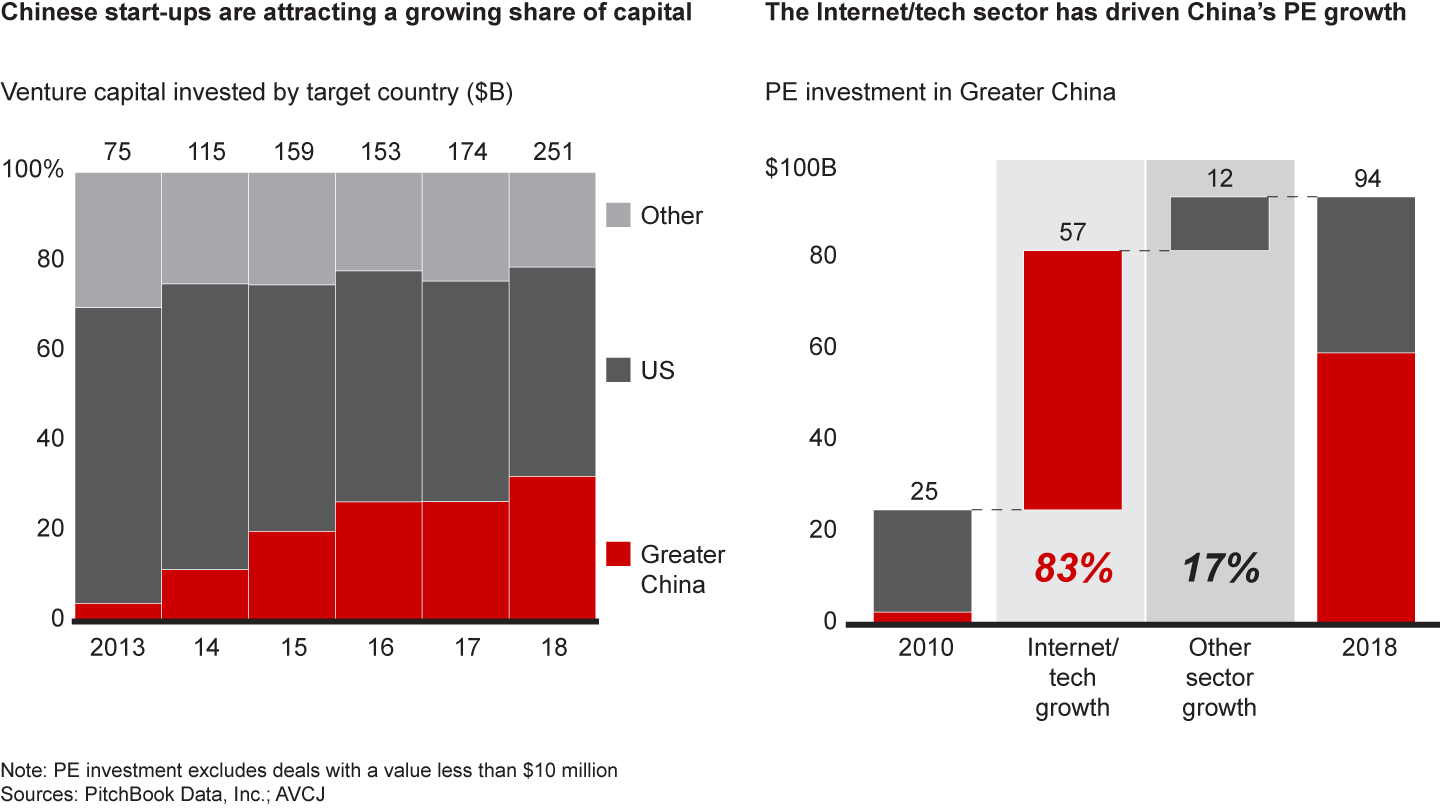
      Greater China’s new economy is moving at astonishing speed
      Greater China’s new economy is moving at astonishing speed
      Greater China’s new economy is moving at astonishing speed

      The US still produces more unicorns—start-ups valued at $1 billion or more—but Greater China is now producing them at a faster pace than the US. Internet and technology deals have accounted for roughly 85% of Greater China’s PE investment growth over the past eight years, and they represented fully half of all Asia-Pacific deal value in 2018.

      As investors flock into the market, however, there are clear signs that China’s new economy may be overheating. With asset values soaring, we see potential for the speculative bubble to burst sooner rather than later. Fund managers who continue investing in Chinese Internet and tech companies do so now at considerable risk. Some may have the expertise to navigate the risks successfully, but for most investors, particularly those that haven’t yet entered the market, staying on the sidelines is likely the smartest short-term approach. Now’s the time to develop a clear strategy for the future by identifying where to strike opportunistically when valuations become more attractive. Given its long-term potential, China’s new economy will almost certainly bounce back from any crash.

      A different world

      By many measures, China’s new economy is in a class of its own. China’s consumers behave differently than Western consumers. Obsessed with technology and convenience, they snap up new products and online services quickly. Chinese Internet users surpass US users, for example, in adopting new apps for online entertainment, payments, and education and travel services. In the mobile payments industry, China racked up $9 trillion in transactions in 2016, 80 times the US level of $112 billion.

      Cutthroat competition among the country’s burgeoning Internet and tech companies has shaped a Darwinian corporate culture. Managers expect their teams to deliver the rapid growth needed to survive. Employees in China’s tech sector work a grueling 72 hours per week on average—12 hours a day, six days a week. The pool of skilled labor is also deeper—China has almost six times more computer science graduates than the US. Overall, US computer scientists may be more skilled, but the profusion of engineering talent in China accelerates development.

      Fueled by intense, open-source competition, Chinese tech companies also grow faster. While Silicon Valley companies have tended to steer clear of copycat products and services, Chinese managers consider it good corporate practice to copy the competition. Unlike their US counterparts, Chinese Internet and tech companies expand outside their core product or service in every direction. China’s Internet giants, for example, have acquired companies in financial services, gaming, education, healthcare and artificial intelligence.

      Unsurprisingly, this dynamism has attracted a stampede of investors keen to tap into this large and growing market. According to Bain’s 2019 Asia-Pacific private equity survey, 80% of Greater China–focused funds are considering or actively pursuing new-economy deals. In 2017–18, more than 800 PE investors had a stake in an Internet or technology deal in China with a value greater than $10 million, up from about 170 in 2009–10. China’s new economy, once dominated by venture capitalists, now includes traditional private equity houses, LPs, sovereign wealth funds, and Internet giants such as Alibaba, Tencent and Baidu. The influx of investors has saturated the market for smaller deals and prompted many to focus on larger investments: Average deal size rose to $213 million in 2018, up from $30 million in 2013.

      Insights in Your Inbox

      Get Our Latest Private Equity Insights

      Receive Bain’s landmark Global Private Equity Report each February, plus the latest insights and developments in private equity throughout the year.

      Early warning signs

      For traditional PE investors, China’s new economy can be particularly challenging. Our research shows that 85% of PE investors focused on Greater China consider it difficult to evaluate new-economy companies, mainly because traditional PE valuation techniques don’t work in that market and because it’s difficult to justify investing in loss-making businesses.

      At the moment, those risks are magnified by inflated expectations. Internet and technology deals already are wildly overpriced compared with other sectors. At 31 times EBITDA, median M&A deal multiples for Chinese Internet and tech companies are twice as high as those for other industries in Greater China, and 2.4 times greater than the median multiple for Asia-Pacific deals in 2016–18. That’s a warning signal for investors, and funds’ recent performance underscores the danger. China’s new-economy returns are in free fall: Median return multiples dropped to less than 2.0 times in 2016–18, from 4.7 times in 2014–15.

      Another ominous sign: the sizable and expanding exit overhang of Internet and tech assets. Over the past five years, PE funds acquired more than 1,000 Internet and technology companies in Greater China with a value of $10 million or more, but they divested only about 130 in the same time frame. That trend means viable exit opportunities are scarce. Recent initial public offerings (IPOs) are a case in point. Companies that went public between 2017 and 2018 had lost, on average, 21% of their initial market capitalization 12 months post-IPO. And the losers lost big: 62% of companies that went public shed more than 30% of their value. By contrast, companies that went public between 2015 and 2016 gained an average of 105% in value in the first 12 months after the IPO. Only 7% lost more than 30% of their value. As the IPO market softens and return multiples drop, funds that overpaid for companies in their portfolios see no alternative but to hold onto assets (see Figure 1.13).

      Figure 1.13
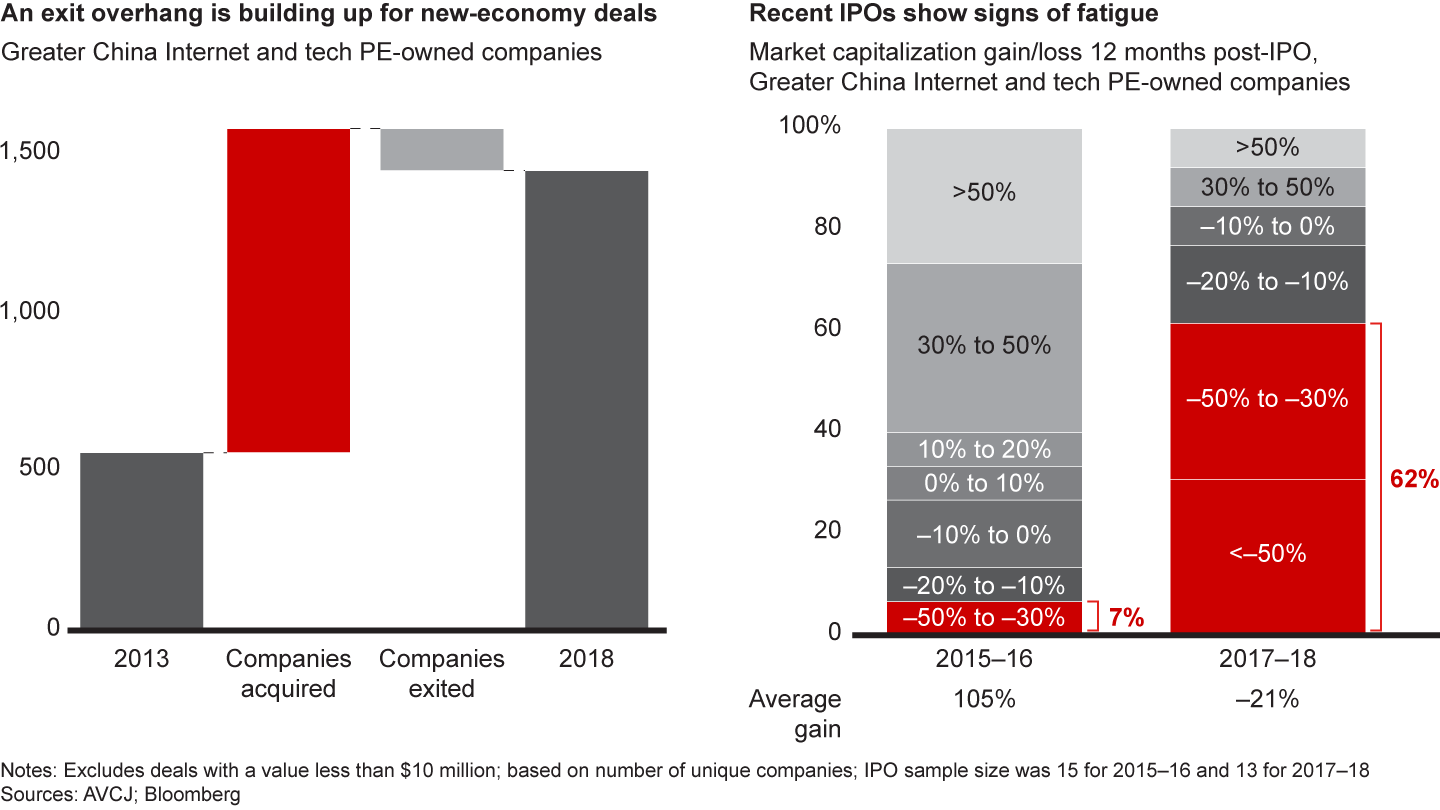
      There are warning signs that China’s new-economy bubble may burst
      There are warning signs that China’s new-economy bubble may burst
      There are warning signs that China’s new-economy bubble may burst

      Given those challenges, it’s no surprise that GPs focused on Greater China are wary. A full 65% of those we surveyed see a high to very high risk of a bubble bursting in the coming years. Meanwhile, only 6% of them believe they are operating at full potential when it comes to establishing partnerships to help source new-economy deals. The same small proportion say they have a proven model to evaluate risks or add value in this sector.

      Strategies for the future

      Given the degree of uncertainty, the best strategy is likely to hold fire. There are plenty of solid investment opportunities outside China’s new economy, in markets that are not so overpriced. What is risky today, however, could well become attractive in the future, when soaring valuations retreat to a normal range. China’s new economy is moving at astonishing speed. Its entrepreneurs are creating a new paradigm for growth and value creation. That’s a wake-up call that fund managers should not ignore. Those who focus on defining a strategy now will be well positioned to seize opportunities, especially in a post-bubble market.

      A few questions can help fund managers map out a clear approach for the future:

      • What are the distinct capabilities that helped us win in the past, and which ones are transferable to new-economy markets in China?
      • Under what conditions might it make sense to invest in Chinese tech or Internet companies in the future?
      • If we decide to enter this market, where should we play first, and why?
      • What are the capabilities or partnerships we would need? Which ones can be built or bought now?

      This article is part of Bain’s 2019 Global Private Equity Report. Explore the contents of the report here or download the PDF to read the full report.

      著者
      • Headshot of Hugh MacArthur
        Hugh MacArthur
        パートナー, Boston
      • Headshot of Rebecca Burack
        Rebecca Burack
        パートナー, Boston
      • Headshot of Christophe De Vusser
        Christophe De Vusser
        Worldwide Managing Partner, New York
      • Headshot of Kiki Yang
        Kiki Yang
        パートナー, Hong Kong
      • Headshot of Brenda Rainey
        Brenda Rainey
        Executive Vice President, Boston
      関連業種
      • プライベートエクイティ
      関連するコンサルティングサービス
      • 戦略
      コンサルティングサービス
      • Firm Strategy & Operations
      プライベートエクイティ
      グローバル・プライベート・エクイティ・レポート 2019
      詳細
      プライベートエクイティ
      Buy-and-Build: A Powerful PE Strategy, but Hard to Pull Off

      Getting it right hinges on three critical factors.

      詳細
      プライベートエクイティ
      Public Vs. Private Assets: The Big Switch

      The pendulum has swung in favor of private—will it swing back?

      詳細
      プライベートエクイティ
      Private Equity’s New Take on Diversification: Don’t Stray Too Far

      Funds that stay close to the core have a leg up.

      詳細
      プライベートエクイティ
      Spotting the Downturn Early and Coming Out Ahead with Gryphon’s David Andrews

      We ask the co-CEO of Gryphon Investors how he spotted one of the harshest cycles in the industry’s history and when he thinks it may finally break.

      詳細
      First published in 2月 2019
      Tags
      • Firm Strategy & Operations
      • プライベートエクイティ
      • 戦略

      お気軽にご連絡下さい

      私達は、グローバルに活躍する経営者が抱える最重要経営課題に対して、厳しい競争環境の中でも成長し続け、「結果」を出すために支援しています。

      ベインの知見。競争が激化するグローバルビジネス環境で、日々直面するであろう問題について論じている知見を毎月お届けします。

      *プライバシーポリシーの内容を確認し、合意しました。

      プライバシーポリシーをご確認頂き、合意頂けますようお願い致します。
      Bain & Company
      お問い合わせ Sustainability Accessibility Terms of use Privacy Cookie Policy Sitemap Log In

      © 1996-2026 Bain & Company, Inc.

      お問い合わせ

      How can we help you?

      • ビジネスについて
      • プレス報道について
      • 採用について
      全てのオフィス